 how-to
Window Tinting for Large Commercial Fleets: A Planning Guide
Table of Contents
- Why Window Tinting Matters for Commercial Fleets
- Understanding Window Tint Laws for Commercial Vehicles
- Selecting the Best Window Tint for Commercial Vehicles
- Fleet Tint Installation: Planning and Execution
- Commercial Vehicle Tint Cost and ROI Planning
- Heat, Glare, and UV Protection Benefits
- Common Mistakes to Avoid in Fleet Tinting Projects
- Frequently Asked Questions
Last Updated: October 9, 2026
Why Window Tinting Matters for Commercial Fleets
Window tinting for large commercial fleets is a strategic investment, not an aesthetic upgrade. It addresses driver fatigue from glare, heat damage to interiors, and fuel costs from overheated cabins.
A single commercial vehicle operates 8-12 hours daily. Over years, untinted windows expose drivers to solar heat and UV rays: seats crack, dashboards fade, visibility suffers, and crews report fatigue that affects safety and productivity.
Professional-grade film applied fleet-wide extends vehicle life, reduces maintenance costs, and creates a consistent brand appearance.
This guide shows how to approach window tinting for large commercial fleets.
Understanding Window Tint Laws for Commercial Vehicles
Before selecting film or scheduling installation, understand the legal landscape. Tint regulations vary by state, and violations bring fines, failed inspections, and downtime.
No federal tint standard exists; each state sets its own visible light transmission (VLT) requirements. VLT measures the percentage of light passing through a tinted window: 70% VLT lets 70% through, 35% VLT only 35%.
Visible Light Transmission Requirements
VLT determines whether your fleet's tinted windows comply with state law. Most states allow darker tint on rear and side windows than on the windshield.
Commercial vehicle rules are often more lenient than passenger car rules. Many states permit 35% VLT on side and rear windows for commercial vehicles, while passenger vehicles must stay at 50% or higher. Windshields face stricter rules nearly everywhere, typically 70% VLT or higher.
Your fleet can achieve significant heat and glare reduction on side and rear windows while staying compliant; the windshield remains the constraint.
Windshield and Side Window Restrictions
Windshield tinting is heavily restricted. Most states require at least 70% light transmission, some higher. A few allow a tinted band at the top (sun visor area), but the driving area must stay largely clear.
Side and rear windows offer more flexibility, capturing substantial heat reduction and glare control without sacrificing driver visibility.
Before committing to a fleet-wide project, verify VLT requirements for every state where your vehicles operate. If your fleet crosses state lines, select a tint darkness complying with the strictest state you enter. Some operators instead choose lighter tint (50-60% VLT) that works everywhere, accepting less heat reduction for universal compliance.
Selecting the Best Window Tint for Commercial Vehicles
Film type affects durability, heat rejection, cost, and long-term performance. For large commercial fleets, durability is critical: you can't afford frequent re-tinting.
Film Types: Dyed, Metalized, Carbon, and Ceramic
Dyed window film is the most affordable option, using a dye layer beneath the surface for a dark appearance. It fades under intense UV radiation; in year-round direct sunlight, dyed film typically lasts 3-5 years before noticeably fading and losing effectiveness.
Metalized film contains tiny metal particles that reflect heat and light. It's more durable than dyed film with better heat rejection, but it can interfere with radio signals, GPS, and cell phone reception, a significant drawback for vehicles relying on dispatch systems and navigation. It lasts 5-7 years in most climates.
Carbon film contains carbon particles (not reflective metal) that absorb heat without signal interference. More durable than dyed film and better at resisting fade, it balances performance, durability, and reliability. Expect 7-10 years of performance.
Ceramic film is the premium option: ceramic particles provide superior heat rejection without signal interference, resist fading, maintain clarity, and can last 10+ years. For large commercial fleets, the higher upfront cost is often justified by extended lifespan and reduced maintenance.
For a fleet project, carbon or ceramic film are often recommended. Dyed film may require re-tinting within a few years, and metalized film can create operational problems for vehicles depending on communications and navigation systems.
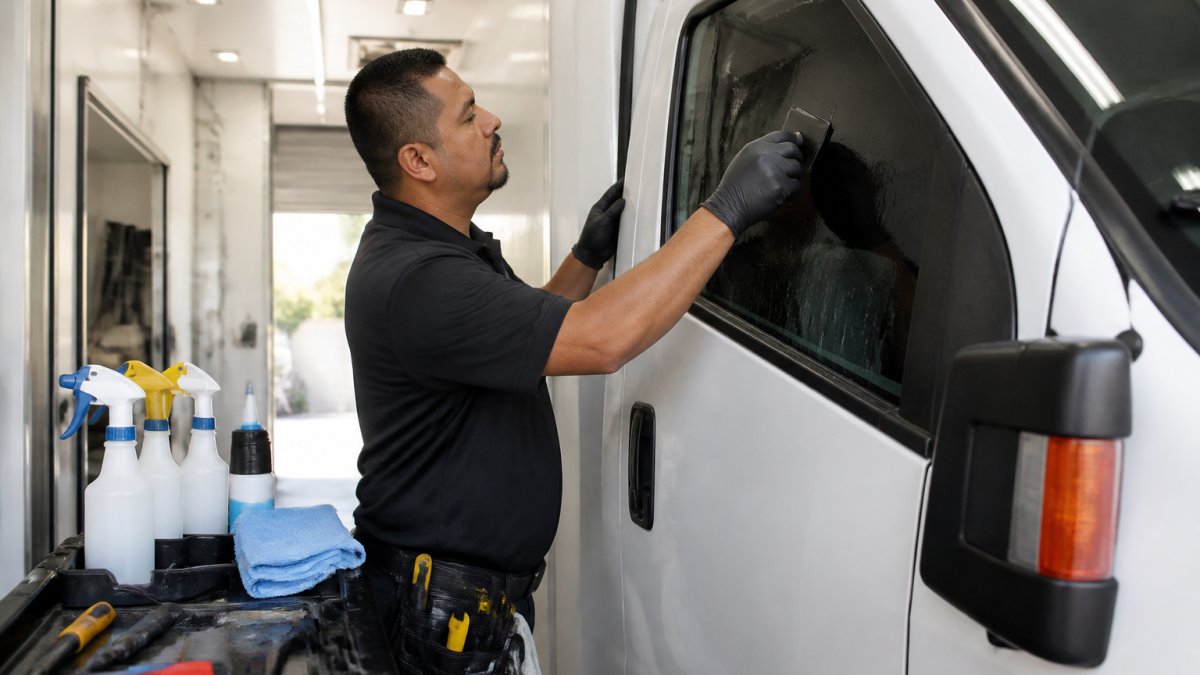
Durability and Long-Term Performance
Durability directly impacts total cost of ownership. A film lasting 5 years requires re-tinting twice as often as one lasting 10 years, a significant operational and financial burden at fleet scale.
High-quality ceramic and carbon films resist fading, peeling, and bubbling, maintaining optical clarity and heat rejection across years of UV, temperature extremes, and contaminants. For a 20- or 100-vehicle fleet, the per-vehicle cost difference is modest, but the durability advantage compounds.
Installation quality directly affects durability. Air bubbles, incomplete adhesion, or contamination during application create weak points where film degrades faster, which is why professional installation matters, especially where consistency across dozens of vehicles is essential.
Fleet Tint Installation: Planning and Execution
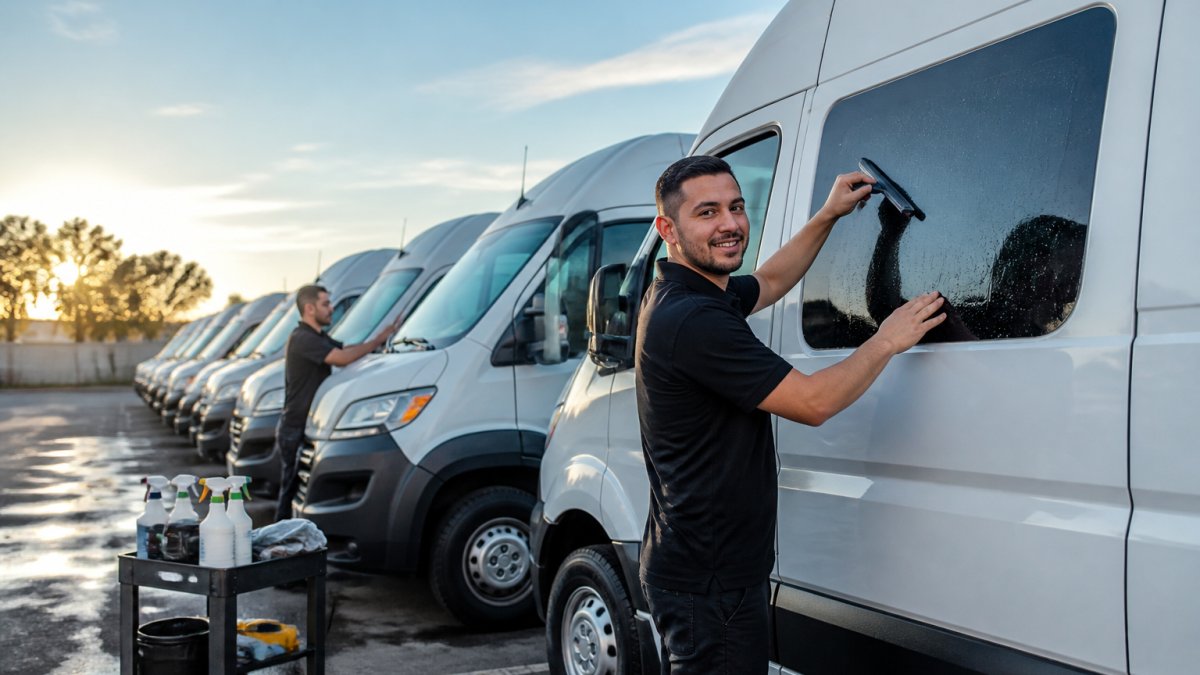
A large fleet tinting project is logistically complex: multiple vehicles, coordinated schedules, consistent quality, and minimal downtime. Proper planning prevents costly delays and quality issues.
Pre-Installation Compliance and Documentation
Before the first vehicle arrives, confirm state VLT requirements for every jurisdiction where your fleet operates and document your target VLT percentage. This becomes your quality control standard: every vehicle must meet it.
Create a vehicle inventory spreadsheet listing each vehicle's VLT baseline, target VLT after tinting, and compliance notes. Vehicles with existing tint may need old film removed first, adding time and cost, so factor this into your timeline.
Photograph each vehicle's windows before tinting to create a baseline record and protect against disputes about pre-existing damage, then photograph the same windows after tinting to document the result.
Installation Timeline and Scheduling
Professional tinting for a single commercial vehicle typically takes 2-4 hours, depending on size and window complexity: a full-size truck takes longer than a sedan, and a van with rear cargo windows longer still.
Schedule vehicles in batches. Bringing in 3-5 per week keeps the crew efficient while giving you time to inspect each vehicle before the next batch. Avoid scheduling the entire fleet at once: if quality issues emerge, dozens of vehicles may already be tinted incorrectly.
Coordinate with your operations team to minimize disruption: schedule tinting during low-use periods or rotate vehicles to maintain capacity. With 20 vehicles and 5 tinted weekly, you retain 75% in service.
Quality Control and Post-Installation Inspection
After each vehicle is tinted, inspect it thoroughly before signing off. Check for:
- Uniform tint darkness across all windows (no light spots or inconsistencies)
- Smooth adhesion with no bubbles, wrinkles, or peeling edges
- Clean window frames with no residual adhesive or debris
- Proper alignment on curved windows
Document any defects and require the installer to correct them before the vehicle leaves, preventing small issues from becoming fleet-wide problems.
Keep records of each vehicle's tint specification, installation date, film type, and VLT measurement; these are essential for tint inspections or later warranty issues.
Commercial Vehicle Tint Cost and ROI Planning
Fleet tinting is an investment. Understanding the cost structure and potential returns helps justify the expense to leadership and plan your budget.
Cost Factors and Pricing Variables
The cost of Commercial Window Tinting for large commercial fleets depends on vehicle size, film type, removal of existing tint, and regional labor rates. Larger vehicles (trucks, vans, buses) cost more due to more window surface area, ceramic film costs more than carbon or dyed, and removing old tint adds labor time and cost.
For accurate pricing, request quotes from professional tinting providers in your area with a detailed vehicle list specifying vehicle types, current tint status, and target VLT, so they give realistic estimates rather than generic ranges.
Don't select quotes on price alone. A low-cost provider may use lower-quality film or rush installation, causing durability problems. Mid-range providers often deliver the best value: quality materials and professional techniques without luxury-shop pricing.
Measuring Heat Reduction and Driver Comfort
The primary benefit of fleet tinting is heat reduction. Tinted windows block solar radiation, lowering cabin temperatures and reducing air conditioning load, which yields two measurable outcomes: improved driver comfort and reduced fuel consumption.
Driver comfort affects retention and safety: crews in hot vehicles experience fatigue, reduced alertness, and higher turnover. Tinting can create a noticeably more comfortable work environment.
Fuel savings come from reduced air conditioning load: a cooler cabin requires less AC cycling, reducing engine load and fuel consumption. For a fleet operating hundreds of thousands of miles annually, modest per-vehicle savings compound into significant annual savings.
To measure impact, compare fuel consumption before and after tinting and track cabin temperatures with a simple thermometer over several weeks, providing concrete evidence of the project's value.
Heat, Glare, and UV Protection Benefits
Window tinting delivers three interconnected benefits for vehicle condition and crew safety.
Heat reduction is the most immediate benefit. Solar heat through untinted windows forces air conditioning to work harder; tinted windows block 40-65% of solar heat (depending on film type), reducing cabin temperature and AC demand.
Glare reduction improves visibility and reduces eye strain. Sunlight reflecting off roads, vehicles, and water impairs visibility and causes fatigue; tinted side and rear windows cut glare significantly. Drivers report less squinting, fewer headaches, and better focus on long shifts.
UV protection preserves interiors. UV radiation fades leather, cracks dashboards, and degrades upholstery, so untinted vehicles deteriorate visibly over years. Tinted windows block 99% of UV radiation, preserving seats, dashboards, and trim, extending each vehicle's useful life and resale value.
These benefits reinforce each other: a cooler cabin reduces stress on materials, reduced UV prevents fading and cracking, and reduced glare improves driver focus and safety, together creating measurable gains in vehicle longevity and crew experience.
Common Mistakes to Avoid in Fleet Tinting Projects
Fleet tinting projects often hit preventable problems. Learning from common mistakes helps you execute a smoother project.
Mistake 1: Selecting tint darkness without verifying state laws. Tint that looks good may violate local VLT requirements, creating legal exposure and costly re-tinting. Verify requirements before committing to a darkness level.
Mistake 2: Choosing low-cost film to save money upfront. Dyed film costs less initially. Carbon or ceramic film can offer better lifetime value.
Mistake 3: Scheduling the entire fleet at once without quality checkpoints. Defects emerging during installation may go unnoticed until dozens of vehicles are tinted. Schedule in small batches and inspect each vehicle before proceeding.
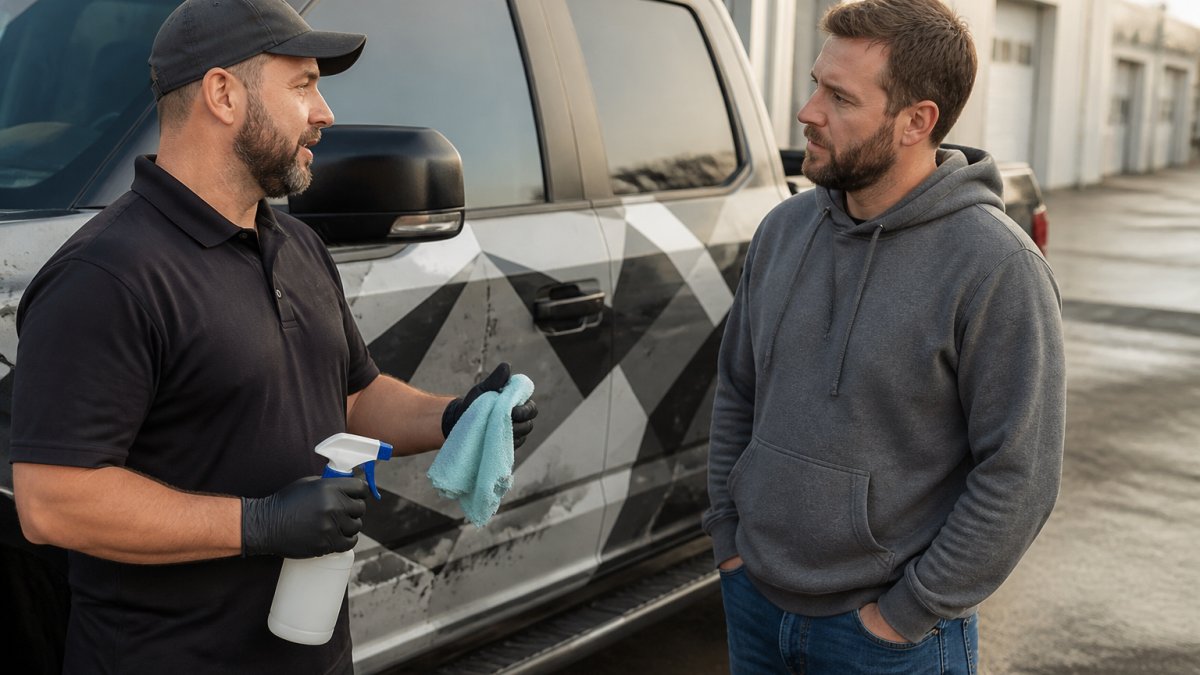
Mistake 4: Failing to remove old tint properly. New film over degraded old tint creates adhesion problems and reduces durability. Budget time and cost for proper removal first.
Mistake 5: Skipping documentation and records. Without photos, VLT measurements, and installation dates, you have no baseline for warranty claims or compliance verification. Maintain detailed records for every vehicle.
Mistake 6: Using metalized film on vehicles with GPS, dispatch systems, or two-way radios. Metalized film interferes with radio signals and navigation, creating operational problems for fleets relying on real-time communication and routing. Use carbon or ceramic film instead.
Window tinting for large commercial fleets is a strategic decision affecting driver safety, vehicle longevity, and operational costs.
Signs and Window Tinting LLC uses premium films and proven installation techniques to deliver consistent, professional results.
Ready to improve your fleet's comfort, durability, and compliance? Get a Free Quote! Let us show you how professional window tinting protects your investment and keeps your crews safe.
Frequently Asked Questions
What is the darkest legal tint for commercial vehicles?
Legal tint limits vary by state. Always verify your state's specific regulations before installation. Non-compliance can result in citations and fleet-wide operational issues.
How does window tint reduce heat and glare in commercial vehicles?
Window film blocks solar heat by reflecting and absorbing infrared radiation before it enters the cabin. Glare reduction occurs through the film's light-filtering properties, which decrease visible light transmission while maintaining driver visibility. For fleet drivers spending long hours on the road, this improves comfort and reduces eye strain, particularly important for safety-sensitive operations.
What film type lasts longest for commercial vehicle fleets?
Ceramic and carbon window films offer superior durability for commercial fleets compared to dyed tints. Ceramic films resist fading, bubbling, and discoloration, making them ideal for vehicles operating in high-UV or extreme-temperature environments. Carbon films provide excellent heat rejection and durability at a lower cost than ceramic. Both outperform dyed films. The film choice should match your fleet's operating conditions and expected vehicle lifespan.
How long does it take to tint a large fleet of vehicles?
Installation time per vehicle typically ranges from 2-4 hours, depending on the number of windows and film complexity. Scheduling professional installation allows technicians to maintain quality control while minimizing downtime. Pre-scheduling, preparing vehicle documentation, and coordinating with drivers beforehand ensures smooth execution and helps avoid compliance issues during the project.