 how-to
How to Identify High Quality Window Film
Table of Contents
- What Makes High Quality Window Film Stand Out
- Understanding Window Film Performance Specifications
- High Quality vs. Low Quality Window Tint: Key Differences
- How to Verify Window Film Warranty and Manufacturer Claims
- Questions to Ask Your Window Tint Installer
- Inspecting Film Quality After Installation
- Frequently Asked Questions
Last Updated: October 18, 2026
What Makes High Quality Window Film Stand Out
High quality window film is the foundation of any successful tinting project, but most people assume all film performs similarly. It doesn't.
At Signs and Window Tinting LLC, we offer expert window tinting for automotive, residential, and commercial applications. The best films share three traits: quality materials, measurable performance standards, and real warranties.
Know what to look for before installation, replacing film is expensive and time-consuming.
Understanding Window Film Performance Specifications
Manufacturers publish specifications that tell you exactly what a film does.
Solar Heat Gain Coefficient and Visible Light Transmission
Solar heat gain coefficient (SHGC) measures how much solar heat a film blocks.
Look for films where manufacturers publish both numbers. If a seller won't share specs, that's a warning sign.
Ultraviolet and Infrared Rejection Ratings
Ultraviolet (UV) rejection protects skin, furnishings, and artwork from sun damage.
Infrared rejection is where quality films stand out: advanced ceramic films block infrared heat while maintaining clarity, while dyed or low-cost options struggle.
Ask for these numbers in writing, not just verbal claims.
High Quality vs. Low Quality Window Tint: Key Differences
The gap between premium and budget film shows in materials, construction, and real-world performance.
Material Construction and Film Thickness
High quality films use multiple layers. Polyester (PET) substrate provides the base.
Thickness matters too: films 2 mils or more resist scratching and peeling better than 1-mil films.
Warning Signs of Counterfeit or Low Grade Film
Counterfeit window film exists. Recognizing it saves money and frustration.
Watch for these red flags:
- No manufacturer name or contact information on packaging
- Missing performance specifications or warranty details
- Unusually low pricing compared to market rates
Legitimate manufacturers provide warranties, publish specs, and make themselves easy to contact.
How to Verify Window Film Warranty and Manufacturer Claims
Step 1: Get the manufacturer data sheet, not the sales sheet
Ask for the manufacturer's published performance data sheet for the exact product code, not a generic brochure. A legitimate data sheet lists, for the specific film and glass combination:
- Visible light transmission (VLT), visible light reflectance (VLR), and visible light absorption
- Solar heat gain coefficient (SHGC) and total solar energy rejected (TSER)
- Ultraviolet (UV) rejection
If the seller can only offer a one-page flyer with a single '99% heat rejection' headline, you don't have verifiable data.
Step 2: Match the number to the test standard
Performance figures are only comparable when they come from the same method. The standards cited most often in window film are:
- NFRC 100 and NFRC 200, the National Fenestration Rating Council's procedures for U-factor, SHGC, VLT, and condensation resistance. NFRC-certified products carry a label with these values, and the NFRC directory lets you look up a product by manufacturer and code.
- ASTM E903 / ASTM E892, solar optical properties measured by spectrophotometer.
- ASTM G154 and ASTM G155, accelerated weathering under fluorescent UV and xenon-arc lamps, used to support fade and durability claims.
A film claiming '99% UV' should show UV rejection from a spectrophotometric test, not a rounded marketing figure, and a specific SHGC should cite NFRC or an equivalent calculation.
Step 3: Cross-check the claim against an independent source
You don't have to take the manufacturer's word for it. Three practical checks:
- NFRC directory, search the product by manufacturer and product code. If the film is NFRC-certified, the certified values should match the data sheet. A mismatch is a red flag.
- Third-party lab reports, ask whether the manufacturer has test reports from an independent lab (not an in-house facility). Reputable manufacturers will share the summary page with the lab name, test date, and standard cited.
- Warranty cross-reference, the warranty should name the same product code and performance characteristics the data sheet lists. If the warranty is generic ('all film products') while the data sheet is product-specific, the paperwork is inconsistent.
Step 4: Read the warranty like a contract, not a promise
Quality film warranties typically run for several years for residential and commercial installations. Read for these specifics:
- Named coverage, adhesion failure, bubbling, peeling, delamination, color change, and UV performance should be listed explicitly. 'Warranty against defects' with no definitions is weak.
- Exclusions, improper installation, glass breakage, normal wear, cleaning with abrasive products, and film applied to incompatible glass are commonly excluded. Know them before you buy.
- Transferability, some warranties transfer to a new owner if you sell the home or vehicle; many do not. Ask in writing.
Step 5: Separate product warranty from installation warranty
These are two different documents that fail in different ways.
Step 6: Verify the installer's credentials
Manufacturer authorization matters because many warranties are voided by unqualified installation.
What to do when claims do not add up
Questions to Ask Your Window Tint Installer
The right installer makes the difference between film that lasts 15 years and film that fails in 3. Before hiring, ask these questions:
- How long have you been installing window film?
- What brands of film do you use, and why?
- Can you provide references from recent installations?
Listen for specific answers. A quality installer explains their process, names the films they use, provides references, and answers directly without pressure tactics.
Signs and Window Tinting LLC has over 35 years of experience installing premium films on automotive, residential, and commercial projects, using quality materials, proven techniques, and warranties that protect your investment. Whether you're looking for Automotive Window Tinting, Residential Window Tinting, Commercial Window Tinting, or even protective services like PPF, we will match the right solution to your needs.
Avoid installers who rush or dodge questions, installation quality directly affects how long your film lasts.
Inspecting Film Quality After Installation
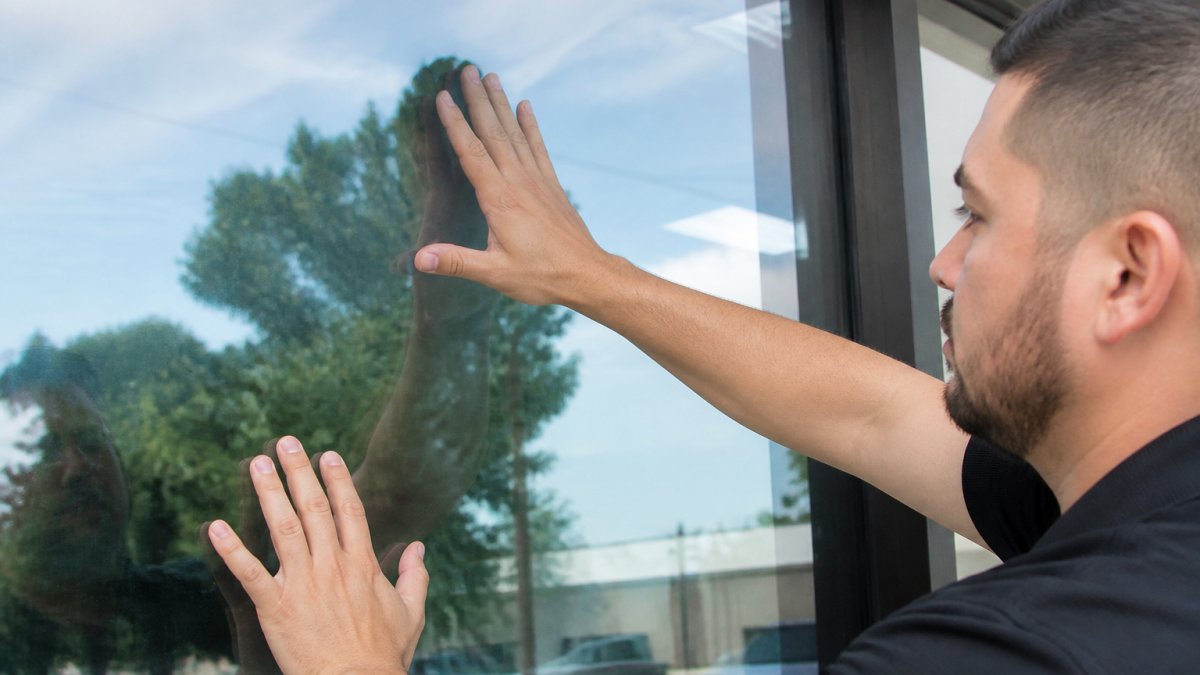
Inspection confirms that the film you paid for is the film installed and that workmanship meets a professional standard.
Set up the inspection correctly
Inspection results depend on how you look. Use these conditions every time so findings are comparable:
- Lighting, inspect in daylight with the window backlit, then again at night with interior lights on. Haze, streaks, and thin spots show up differently under each condition.
- Angle, view the film straight on, then at roughly 45 degrees from both sides. Distortion and adhesive striping are often invisible head-on.
- Distance, stand about 3 feet back for overall appearance, then move within 12 inches for edge and surface detail.
Same-day walkthrough: what to check
- Product identity, confirm the installed film matches the product code on your invoice and the data sheet. Ask to see the box or roll label before it goes in the trash.
- Edges, the film should be cut cleanly and sit uniformly along the glass edge with no gaps wider than a credit card's thickness and no lifting. Edge lift on day one is a workmanship defect, not a curing issue.
- Surface, look for creases, wrinkles, contamination (dust, hair, lint trapped under the film), and cut marks. Trapped contamination is permanent; it will not cure out.
- Clarity, check for haze, mottling, or a wavy 'orange peel' texture. Some texture is normal in thicker films, but it should be uniform across the pane.
- Water, small water pockets and pinhead bubbles are normal on day one. Large water pockets, especially near edges or seams, should be documented.
- Seams and overlaps, on multi-pane or wide installations, seams should be straight, tight, and consistent in width. Gaps or overlaps wider than about 1/16 inch are a workmanship issue.
- Hardware and trim, gaskets, seals, and trim should be reinstalled correctly with no film pinched underneath.
Cure period: what is normal and for how long
Curing time depends on film type, glass, and weather. General guide:
- Automotive film, most water dissipates in 3-7 days; cool, humid weather can stretch this to 2 weeks.
- Residential and commercial architectural film, 2-4 weeks is common, longer in cold or humid conditions and on insulated glass units.
- Thick security and safety film, can take 4-8 weeks because of the heavier adhesive layer.
During cure, small water bubbles and slight milky haze are expected and should shrink steadily.
Follow-up inspection: pass/fail criteria
Use this checklist at the end of the cure period. Document each item with a photo and a note.
| Inspection point | What to check | Acceptable | Not acceptable |
|---|---|---|---|
| Bubbles | Size, number, location | Pinhead bubbles that shrink and disappear within the cure window | Bubbles larger than about 1/8 inch, clusters, or any bubble still present after cure |
| Edges | Adhesion along perimeter | Firm bond, uniform cut line, no lifting | Peeling, gaps, or film lifting at corners |
| Surface | Contamination and texture | Uniform clarity, no trapped debris | Dust, hair, lint, creases, or cut marks under the film |
| Clarity | Haze and distortion | Consistent with the film's rated haze | Streaks, mottling, or distortion beyond the product's design |
| Color | Uniformity across panes | Consistent color pane to pane | Fading, browning, purple shift, or mismatched dye lots |
| Seams | Alignment and width | Straight, tight, consistent | Gaps or overlaps wider than about 1/16 inch |
| Performance | Heat, glare, UV | Noticeable reduction consistent with the data sheet | No measurable change, or performance below the rated value |
Verify performance, not just appearance
Appearance tells you the installation is clean, not that the film is working. Two practical checks:
- Heat and glare, on a sunny day, compare the temperature and glare in a filmed room or vehicle against an unfilmed reference if one is available. A handheld infrared thermometer pointed at the glass surface and at interior surfaces gives you before/after numbers you can keep.
- UV, place a UV-sensitive test card or a piece of colored construction paper behind the filmed glass in direct sun for a few weeks alongside an unfilmed control. A quality film should show a clear difference. This is a rough check, not a lab measurement, but it catches films that fail to block UV at all.
What to do when you find a defect
Document first, then notify. Photograph the defect with a reference object for scale, note the date, pane, and lighting condition, and send it to the installer in writing within the warranty period.
Frequently Asked Questions
How can you tell if window film is high quality?
High quality window film displays optical clarity without bubbles or haze, resists peeling and fading over time, and comes with manufacturer certifications for performance ratings like visible light transmission and solar heat gain coefficient. The film should have consistent adhesion across the entire surface, maintain its color and transparency for years, and include a comprehensive warranty. Ask your installer for documentation of the film's specifications and the manufacturer's testing results to verify authenticity.
What should I look for in window film performance specifications?
Check the visible light transmission (VLT) percentage, solar heat gain coefficient (SHGC), and ultraviolet and infrared rejection ratings. These metrics determine how much light enters, how much heat is blocked, and how much UV protection the film provides. Quality films typically have UV rejection above 99%. Compare these specifications against your climate and window orientation to ensure the film meets your needs for glare reduction, heat rejection, and fade prevention.
Does a window film warranty indicate quality?
A strong warranty is a key indicator of quality. Reputable manufacturers offer warranties covering fading, peeling, bubbling, and discoloration. The warranty should specify what is covered and the manufacturer's commitment to replacing defective film. Before purchasing, request the warranty details and confirm the installer will honor it. Be cautious of films with no warranty or very short coverage periods, as these often indicate lower quality materials or poor manufacturing standards.
What questions should I ask a window tint installer?
Ask about the film brand, model, and performance specifications; whether the film is certified and tested; the warranty coverage and duration; installation timeline and process; post installation care instructions; and how they handle warranty claims. Request references from previous customers and confirmation that they use professional installation techniques. Ask about their experience with your specific use case, automotive, residential, or commercial, and whether they guarantee the work against peeling, bubbling, or fading.