 how-to
Does Window Tint Block UV Rays? A 2026 Guide
Table of Contents
- How Window Film Blocks UV Radiation
- UV Protection Window Film Benefits for Skin and Interiors
- The Difference Between Ceramic and Dyed Window Tint
- Car Window Tinting Laws by State: What You Need to Know
- How to Inspect Film Quality and Maintain UV Protection
- Choosing the Right UV Protection Window Film for Your Vehicle
- Frequently Asked Questions
Last Updated: September 16, 2026
How Window Film Blocks UV Radiation
Yes, does window tint block uv rays? Quality window tint blocks the vast majority of ultraviolet radiation. Window film is a thin polyester layer bonded to glass with an adhesive that absorbs or reflects UV energy before it passes into your vehicle or home. This guide from Signs and Window Tinting LLC explains exactly how that protection works, where it falls short, and how to choose film that actually delivers on its claims.
The distinction matters because not all tint is built the same. A dark dyed film can look protective while letting UV through almost unchecked. The layer doing the work is the film's construction, not its color.
CDC guidance on UV radiation and health effects notes that UV exposure accumulates over a lifetime, which is why daily protection in a vehicle matters as much as sunscreen at the beach.
UVA vs. UVB Rays: What's the Difference?
UVA rays are the longer-wavelength ultraviolet rays that penetrate deep into the skin and drive aging and deeper tissue damage. UVB rays are shorter, burn the surface of the skin, and are the primary driver of sunburn.
| Ray Type | Wavelength Behavior | Primary Risk | Blocked by Standard Glass? |
|---|---|---|---|
| UVA | Penetrates deeply, passes through glass | Premature aging, deeper skin damage | Poorly |
| UVB | Absorbed at skin surface | Sunburn, surface damage | Mostly |
That table explains a common misunderstanding. Car and home windows block most UVB on their own, which is why you rarely burn through glass. UVA passes through far more easily, and that is the gap window film closes.
UV Protection Window Film Benefits for Skin and Interiors
UV protection window film benefits fall into two categories: protecting people and protecting property. On the health side, film reduces the UVA exposure that accumulates during daily commutes and long drives. On the property side, it slows the fading that destroys dashboards, leather seats, hardwood floors, and upholstery.
Fading is not caused by UV alone. Visible light and heat contribute too, but UV is the most aggressive factor. Many businesses find that interiors last noticeably longer when film is installed early rather than after damage has started.
Reducing Skin Cancer Risk for Commuters
Commuters sit behind glass for hours each week, often with one side of the body exposed to direct sun. Dermatologists generally recommend UV-protective film for people with long daily drives or a history of skin sensitivity. Window film does not replace sunscreen, but it reduces the baseline exposure you cannot avoid.
If you have a family history of skin cancer or take photosensitizing medication, ask your doctor how much sun protection you need. Film is one layer of a broader strategy.
The Difference Between Ceramic and Dyed Window Tint
The difference between ceramic and dyed window tint comes down to how each blocks UV and heat, and how that performance holds up over the life of the film.
Dyed film gets its color from a dye layer sandwiched in the polyester. The dye absorbs visible light, which is why it looks dark. UV rejection comes mostly from the adhesive and any UV inhibitors added to the film, not from the dye itself. That is the key point: darkness and UV rejection are separate properties. A dark dyed film can measure lower UV rejection than a light ceramic film.
Ceramic film uses nano-ceramic particles, typically metal oxides, embedded in the film layer. These particles absorb and re-emit infrared energy rather than reflecting it, which is why ceramic films reject heat well without a metallic look and without interfering with cell, GPS, or toll transponder signals. UV rejection is built into the film's chemistry and is typically stable for the life of the film.
Carbon film sits between the two. Carbon particles provide color and heat rejection without metal, giving a matte finish and no signal interference. UV performance is generally good and more stable than dyed film, though usually below premium ceramic.
Metallic film uses a thin metal layer to reflect heat. It rejects heat effectively but can interfere with electronic signals and may corrode or haze over time in some environments.
| Film Type | How It Blocks UV | Heat Rejection | Signal Interference | Durability of UV Performance |
|---|---|---|---|---|
| Dyed | Adhesive and UV inhibitors, not the dye | Low | None | Can degrade as dye and adhesive break down |
| Carbon | Carbon particles plus UV inhibitors | Moderate | None | Good, more stable than dyed |
| Ceramic | Nano-ceramic particles and UV inhibitors | High | None | Stable for film life |
| Metallic | Reflective metal layer | High | Possible | Can degrade if metal layer corrodes |
Why does the question of does window tint block uv rays matter specifically? Because UV rejection and heat rejection are not the same spec, and neither is the same as VLT. A film can be light, reject heat well, and block UV, or be dark, reject heat poorly, and block less UV than its shade suggests. The only reliable way to compare films is to look at the manufacturer's published UV rejection percentage, not the shade or the marketing name.
A common pattern installers see: a customer buys a dark dyed film for the look, then discovers years later that the film has turned purple and hazed. That color shift is the dye and adhesive breaking down under UV and heat, the same degradation that reduces UV performance. Ceramic and quality carbon films resist that breakdown because the UV-blocking component is not a dye that fades.
Car Window Tinting Laws by State: What You Need to Know
Car window tinting laws by state vary widely, and visible light transmission (VLT) is the number most states regulate. VLT percentage describes how much light passes through the glass. A lower VLT means darker tint.
Rules typically differ for front side windows, rear windows, and windshields, and some states restrict reflective films. Enforcement also varies, so a legal setup in one state may not pass inspection in another.
state-by-state window tint law summaries is a useful starting point, but always confirm current requirements with your state's motor vehicle agency before installation. Laws change, and medical exemptions usually require documentation.
How to Inspect Film Quality and Maintain UV Protection
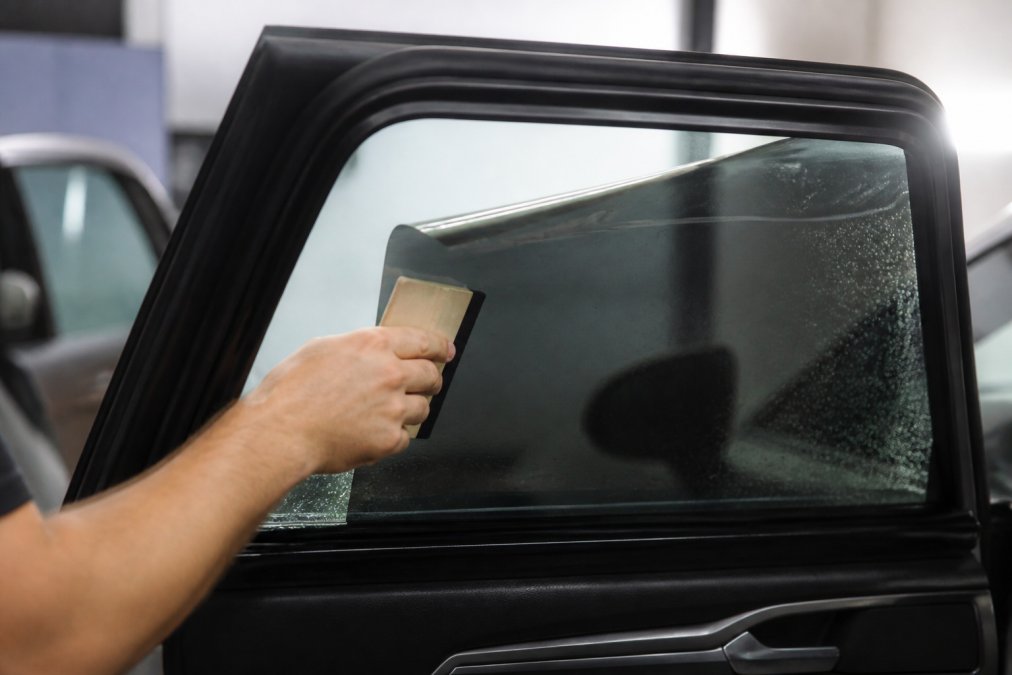
Film quality shows up in the details, not the showroom. Inspect any installation under bright light before you accept it.
- Check for dust, hair, or debris trapped under the film
- Look for bubbles, especially near edges and corners
- Confirm edges are trimmed cleanly with no lifting
- Verify the film sits flush against defroster lines
- Ask for the film's UV rejection specification in writing
Maintenance is simple but not optional. Clean film with a soft cloth and ammonia-free cleaner. Avoid abrasive pads and sharp scrapers near the edges. Most quality films hold their UV properties for years, but cheap film can haze, bubble, or turn purple as the adhesive and dye layers break down. That degradation is exactly why the film's construction matters more than its price tag.
Choosing the Right UV Protection Window Film for Your Vehicle
Choosing film starts with three questions: what UV rejection does it offer, how much heat do you want to reject, and what VLT is legal where you drive. Answer those before you look at price.
| Priority | What to Look For | Why It Matters |
|---|---|---|
| Maximum UV and heat rejection | Ceramic film with high IR rejection | Best for hot climates and long commutes |
| Budget protection | Quality dyed or carbon film | Lower cost, still blocks meaningful UV |
| Legal compliance | VLT within your state limits | Avoids tickets and failed inspections |
| Long-term durability | Written UV spec and warranty | Prevents fading and bubbling |
This is where experience matters.
Frequently Asked Questions
What percentage of UV rays does window tint block?
Most quality window films block 99% of UV rays, including both UVA and UVB. However, this depends on the film type. Dyed films offer less UV protection, while ceramic and carbon films provide the highest levels. Always check the manufacturer's UV rejection rating before buying. Even clear films can block significant UV radiation, so tint darkness does not determine UV protection.
Does clear window film block UV rays?
Yes, clear window film can block up to 99% of UV rays without darkening your windows. This is ideal for drivers who want skin protection and interior fading prevention but prefer to avoid dark tint that may violate car window tinting laws by state. Clear films use UV-blocking layers in the adhesive or polyester film, so you get the protection without changing the look of your glass.
How long does UV protection in window film last?
UV protection in quality window film typically lasts 5 to 10 years or more, depending on film type, sun exposure, and maintenance. Ceramic and carbon films tend to hold up better than dyed films, which can fade or turn purple over time. To maximize lifespan, clean with ammonia-free products and park in shaded areas when possible. Professional installation also ensures the adhesive layer bonds properly, reducing degradation.
Can you get sunburned through a tinted car window?
Yes, you can still get sunburned through a tinted car window if the film does not block UV rays effectively. Standard factory tint often only blocks about 70% of UV rays, and some aftermarket dyed films offer limited protection. To prevent sun damage, choose a film with a high UV rejection rating, such as ceramic or carbon film, which blocks up to 99% of UVA and UVB rays.