 how-to
Vehicle Wrap Maintenance Tips for Longevity
Table of Contents
- Why Vehicle Wrap Maintenance Matters for Longevity
- How to Wash a Car Wrap Correctly
- Choosing pH-Neutral Soap and Safe Cleaning Products
- Pressure Washer Safety: Distance, Angle, and Settings
- Removing Contaminants: Bird Droppings, Sap, and Road Salt
- Best Protectant for Vinyl Wrap and Drying Techniques
- Car Wrap Maintenance Schedule and Seasonal Care
- Understanding Car Wrap Lifespan and Sun Exposure
- Frequently Asked Questions
Last Updated: October 13, 2026
Why Vehicle Wrap Maintenance Matters for Longevity
A vehicle wrap is a vinyl film applied to your car's exterior to change its appearance or protect the paint. Proper vehicle wrap maintenance keeps it lasting and vibrant.
Neglect a wrap and edges lift within months; care for it properly and a quality wrap lasts three to seven years or longer.
This guide covers vehicle wrap maintenance: washing, product selection, contaminant removal, and seasonal care.
How to Wash a Car Wrap Correctly
Hand washing is the only safe way to clean a vinyl wrap; automatic car washes with rotating brushes and harsh chemicals cause premature failure.
Gather the Right Tools and Materials
Use the right tools. Wrong tools cause scratches and edge lifting.
You'll need:
- Two buckets (one for soapy water, one for rinsing)
- Microfiber mitt or soft cloth (never abrasive sponges)
- Microfiber towels for drying
- pH-neutral or vinyl-safe soap
- Hose with adjustable spray nozzle
- Optional: soft-bristle brush for stubborn spots
The microfiber mitt matters most. It grabs dirt without scratching. Regular sponges and brushes are too abrasive for vinyl.
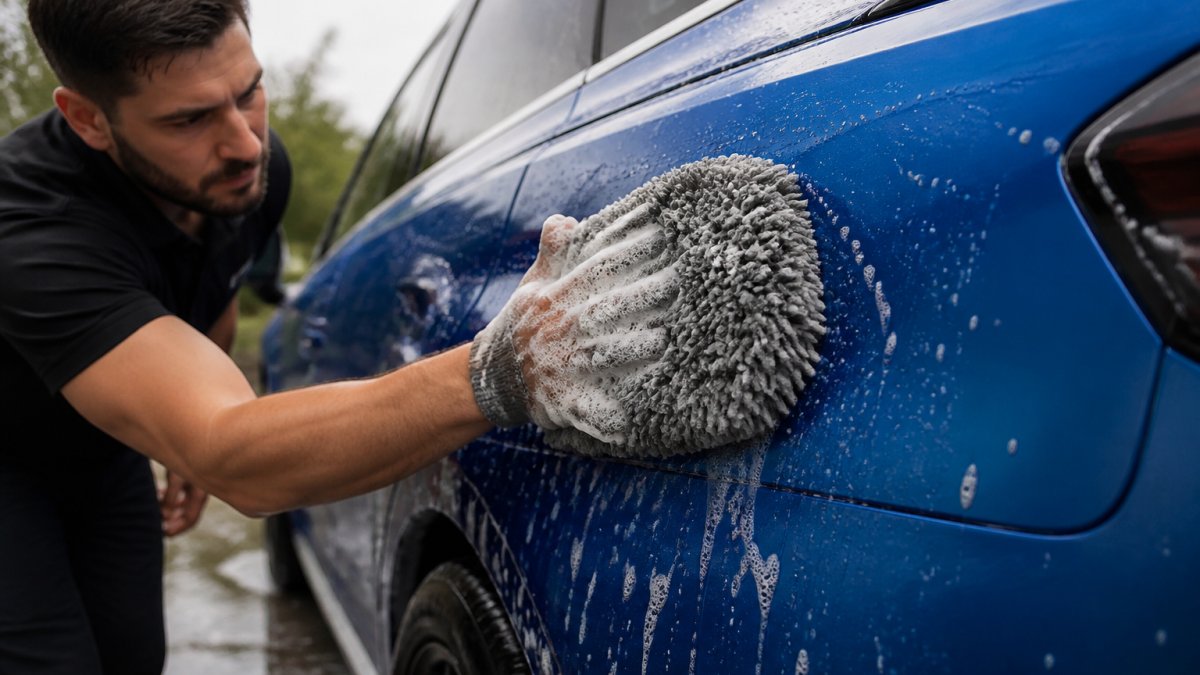
Step-by-Step Hand-Washing Process
Step 2: Fill your buckets Pour pH-neutral soap into one bucket and clean water into the second.
Step 4: Rinse as you go Rinse each section before moving on; dried soap leaves streaks and can damage the finish.
Step 5: Dry immediately Pat dry with clean microfiber towels; air-drying leaves water spots and mineral deposits, so don't rub aggressively.
Hand wash every one to two weeks, or more often in harsh conditions, to prevent buildup that's harder to remove later.
Choosing pH-Neutral Soap and Safe Cleaning Products
Harsh chemicals, wax-based products, and acidic cleaners damage vinyl film and accelerate fading.
pH-neutral detergent is safest: it cleans without stripping the vinyl's protective coating. Look for "vinyl-safe" or "wrap-safe" labels.
Avoid these products on your wrap:
- Automatic car wash soap (too harsh)
- Household cleaners (acidic and damaging)
- Wax and polish products (create buildup)
- Abrasive scrubbing compounds
- Bleach or ammonia-based cleaners
If unsure, test on a hidden area first. For tough stains, a weak mix of water and a few drops of dish soap works; rinse thoroughly afterward.
Pressure Washer Safety: Distance, Angle, and Settings
Pressure washers can lift edges and tear vinyl, but the right technique makes them safe.
Hold the nozzle at least 12 inches away, angle it downward at 45 degrees (never perpendicular), and use a wide spray pattern.
Use low-pressure settings only: 1,500 PSI or lower, since above 2,000 PSI is too aggressive for vinyl.
Warm water loosens dirt without high pressure; keep it below 140 degrees Fahrenheit.
Never aim the pressure washer at wrap edges, since the stream forces water under the vinyl and causes lifting.
Removing Contaminants: Bird Droppings, Sap, and Road Salt
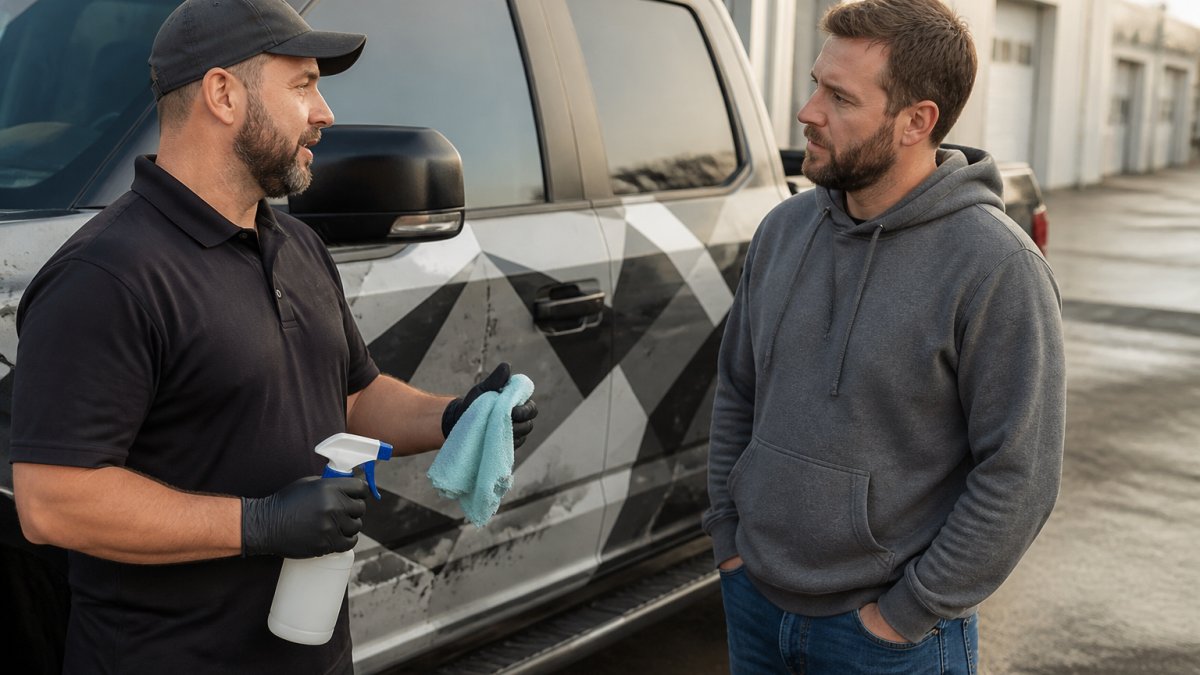
Contaminants are the biggest cause of preventable permanent wrap damage. The longer one sits, the more it etches or stains, so work from least to most aggressive and stop before you damage the film.
The Safe Removal Decision Tree
Use this order every time. Move to the next step only if the previous one fails.
Step 2, pH-neutral wrap soap and a soft mitt. Wash with light, straight passes; don't scrub in circles.
Step 4, Isopropyl alcohol, diluted. A 50/50 mix of isopropyl alcohol and water on a microfiber towel lifts soap and remover residue.
Step 5, Stop and call a professional. If the contaminant has etched, stained, or bonded after steps one through four, stop.
Contaminant-by-Contaminant Guidance
Bird droppings. Acidic and fast-acting; on a hot day in direct sun, etching can begin within hours.
Tree sap. Bonds hard and ignores soap alone.
Bug residue. Acidic like droppings.
Road tar. Use a wrap-safe tar remover applied to a towel, not the film, and wipe in one direction.
Fuel and oil. Wipe up immediately with a dry microfiber, then wash with wrap soap.
Road salt. The winter problem: salt spray accumulates on lower panels, wheel arches, and rocker panels and corrodes edges where film meets paint.
Pressure-Washer Specifications for Contaminant Removal
A pressure washer rinses salt and loose dirt well but is the fastest way to lift an edge. If you use one, follow these limits:
- Pressure: 1,200 to 1,500 PSI maximum; above 2,000 PSI is too aggressive for vinyl.
- Nozzle: 40-degree white tip or wider; never a 0-, 15-, or 25-degree tip.
- Distance: At least 12 inches, and farther at edges and seams.
- Angle: 45 degrees downward, never perpendicular or upward under an edge.
- Water temperature: Warm is fine; keep it below 140 degrees Fahrenheit.
- Direction: Spray with the seam, not against it.
When to Stop and Get Help
Stop and contact a professional if you see any of these after a removal attempt:
- A mark that remains after the contaminant is gone (etching)
- An edge that has lifted, curled, or trapped water
- A bubble or blister that appeared after cleaning
- A color change or dull patch on matte or satin film
- Any tear, gouge, or scratch in the film itself
Early attention on a small lifted edge is inexpensive; waiting until it peels across a panel usually means replacing it.
Best Protectant for Vinyl Wrap and Drying Techniques
Drying and protection both affect wrap lifespan: bad drying causes water spots and mineral etching, while bad protection wastes money or damages the film.
Drying Without Damaging the Film
Microfiber is the only material you should touch a wrap with after washing. A clean, plush drying towel absorbs water without dragging grit, so keep two or three on hand.
Pat and blot rather than rub, working top to bottom.
With hard water, a final rinse of filtered or deionized water before drying cuts mineral spotting dramatically. Water spots in direct sun can etch the topcoat within a day or two, so dry promptly instead of air-drying.
What Actually Protects a Wrap
There are three legitimate protection routes, and they are not interchangeable:
1. The film's own topcoat. Quality cast vinyl ships with a clear protective topcoat that resists UV and mild chemicals. This is your baseline: nothing you add replaces it, and anything abrasive removes it.
2. Wrap-specific ceramic coatings. Formulated for vinyl rather than paint, these cure to a thin, flexible layer that adds hydrophobic and UV-resistant properties, making washing easier and slowing contaminant bonding. They don't replace washing, and matte-safe products won't make matte film glossy.
3. Wrap-specific spray sealants. The low-commitment option: they add slickness and a few weeks of hydrophobic behavior, are easy to apply, and forgive imperfect technique. A reasonable choice for owners who wash frequently and want a light refresh between deeper protection steps.
What to Avoid
Traditional carnauba wax and most paint sealants are wrong for vinyl: wax builds residue that dulls matte finishes, traps dirt in texture, and interferes with the film's ability to shed contaminants. Polishes and compounds are worse, since they're abrasive by design and will burnish or scratch the topcoat.
Finish-Specific Protection Notes
- Gloss film: wrap-safe ceramic coatings and spray sealants both work well and enhance shine.
- Matte and satin film: use only products labeled matte-safe; gloss enhancers create shiny patches that can't be reversed.
- Textured and carbon-fiber-look film: avoid coatings that pool in the texture. A lightly applied spray sealant buffed out of the grain beats a thick ceramic layer.
- Chrome and specialty films: the most fragile. Many manufacturers recommend no coatings and hand washing only, so check the film maker's instructions first.
The Practical Routine
For most owners, the highest-return protection is simple: wash every one to two weeks with pH-neutral wrap soap, dry with clean microfiber, and apply a wrap-specific spray sealant monthly. Add a wrap-safe ceramic coating once or twice a year. Skip wax, polish, and any product not labeled safe for vinyl.
Car Wrap Maintenance Schedule and Seasonal Care
Consistency matters more than intensity: a regular schedule keeps your wrap in top condition year-round.
Monthly maintenance:
- Hand wash every one to two weeks
- Inspect edges for lifting or peeling
- Check for contaminants and remove promptly
Seasonal adjustments:
- Spring: Wash more often as pollen and tree sap increase
- Summer: Park in shade when possible; UV accelerates fading
- Fall: Remove leaves and debris that trap moisture
- Winter: Wash weekly to remove road salt; skip pressure washers in freezing temperatures
Quarterly inspection:
- Look for edge lifting, especially at corners and panel seams
- Check for scratches, chips, or peeling
- Note any fading or color changes
- Address problems early before they spread
Annual professional check: Consider a professional inspection once per year. A specialist can evaluate the condition and recommend repairs or touch-ups if needed. If your wrap includes protective elements like PPF (paint protection film) or if you're considering complementary services like Vehicle Graphics or Vehicle lettering to refresh your vehicle's look, a professional can advise on maintenance for those as well.
Understanding Car Wrap Lifespan and Sun Exposure
Most quality vehicle wraps last three to seven years with proper maintenance. Premium wraps can last longer.
Storage and parking habits extend wrap life significantly. Park in a garage when possible. Use a car cover for long-term storage.
Regular maintenance adds years to your wrap's life. A well-maintained wrap in a favorable climate can last seven years or more.
Proper vehicle wrap maintenance pays off: you protect your wrap's appearance, extend its lifespan, and maintain your vehicle's appeal.
Frequently Asked Questions
How often should I wash a wrapped vehicle?
Hand wash your vehicle wrap every one to two weeks under normal conditions. If you park outdoors or drive frequently on dusty roads, wash weekly. After exposure to bird droppings, tree sap, or road salt, clean the affected area immediately to prevent damage. Regular washing removes contaminants that can degrade the vinyl film and extends the overall lifespan of your wrap.
What is the best protectant for vinyl wrap?
Use a UV-protective spray or vinyl-specific sealant designed for wrapped vehicles. These products add a protective coating that shields the wrap from sun exposure and environmental contaminants without damaging the vinyl. Avoid traditional car wax and polishing compounds, which can leave residue or cause adhesion issues. Always choose products labeled as vinyl-safe or wrap-safe to maintain your wrap's appearance and durability.
Can I use an automatic car wash on my vehicle wrap?
No. Avoid automatic car washes entirely, especially those with brushes or harsh chemicals. Automatic brushes are abrasive and can scratch, lift edges, or peel your wrap. Even brushless automatic washes can apply excessive pressure or use unsuitable detergents. Hand washing with a microfiber mitt and pH-neutral soap is the only safe cleaning method for vinyl wraps and ensures your wrap maintains its finish and adhesion.
What is the average lifespan of a car wrap?
A well-maintained vehicle wrap typically lasts three to seven years, depending on climate, sun exposure, and maintenance frequency. Wraps in regions with intense UV radiation or extreme temperature swings may fade or degrade faster. Wraps parked indoors or in shaded areas last longer. Proper hand washing, prompt contaminant removal, protective coatings, and regular inspection extend your wrap's lifespan and protect your investment.
Protecting your vehicle wrap requires commitment, but the process is straightforward. Regular hand washing with the right products, prompt contaminant removal, and seasonal adjustments keep your wrap looking new for years. If your wrap shows signs of damage or you need professional maintenance advice, Signs and Window Tinting LLC offers expert vehicle graphics services. Get a Free Quote to discuss your wrap's condition and maintenance needs with our experienced team.