 blog
7 Benefits of Heat Rejection Window Tint for Cars
Last Updated: October 25, 2026
Quick Summary
The benefits of heat rejection window tint for cars include a cooler cabin, less glare, UV protection, reduced interior fading, and less strain on your AC. Heat rejection film targets infrared radiation, where most solar heat travels, so film type matters more than darkness.
- A dark dyed film can make the cabin hotter because it absorbs heat into the glass itself.
- Nano-ceramic film reflects infrared heat while staying clear and won't interfere with cell signals or GPS.
- IR rejection is the closest single predictor of how the cabin will feel on a hot day.
- Ask at what wavelength IR rejection was measured and whether the film was tested on glass.
- Wait a few days before rolling windows down and never clean tint with ammonia.
Table of Contents
- Does Car Window Tint Reduce Heat? How Heat Rejection Film Works
- 7 Benefits of Heat Rejection Window Tint for Cars
- Ceramic Tint Heat Rejection: The Performance Leader
- Carbon Tint vs Regular Tint: How Film Types Compare
- Reading the Numbers: TSER, IR Rejection, UV Rejection, and VLT
- Car Window Tint Aftercare: Curing, Cleaning, and Long-Term Value
- Get a Free Quote for Heat Rejection Tint on Your Vehicle
- Frequently Asked Questions
Does Car Window Tint Reduce Heat? How Heat Rejection Film Works
Yes, car window tint reduces heat, but how much depends on the film. Heat rejection film works by reflecting or absorbing solar energy before it passes through the glass. At Signs and Window Tinting LLC, we've installed these films since 1992.
Here's the simple version: sunlight carries energy in three forms.
- Visible light that you can see
- Infrared radiation that you feel as heat
- Ultraviolet radiation that you can't see or feel but damages surfaces
A basic tint blocks some visible light. A heat rejection film targets the infrared band, which is where most solar heat travels. That's the key difference.
Solar Heat Gain and Interior Temperature Reduction
Solar heat gain is the amount of heat that enters your car through the glass. Untinted windows let most of it straight through.
A quality heat rejection film cuts that flow. The cabin stays cooler, and your air conditioning doesn't have to work as hard. Many drivers notice the biggest change on short trips, when the AC never had time to catch up before.
Does window tint reduce heat in every case? No. A dark dyed film can actually make the cabin hotter because it absorbs heat into the glass itself. Film type matters more than darkness.
7 Benefits of Heat Rejection Window Tint for Cars
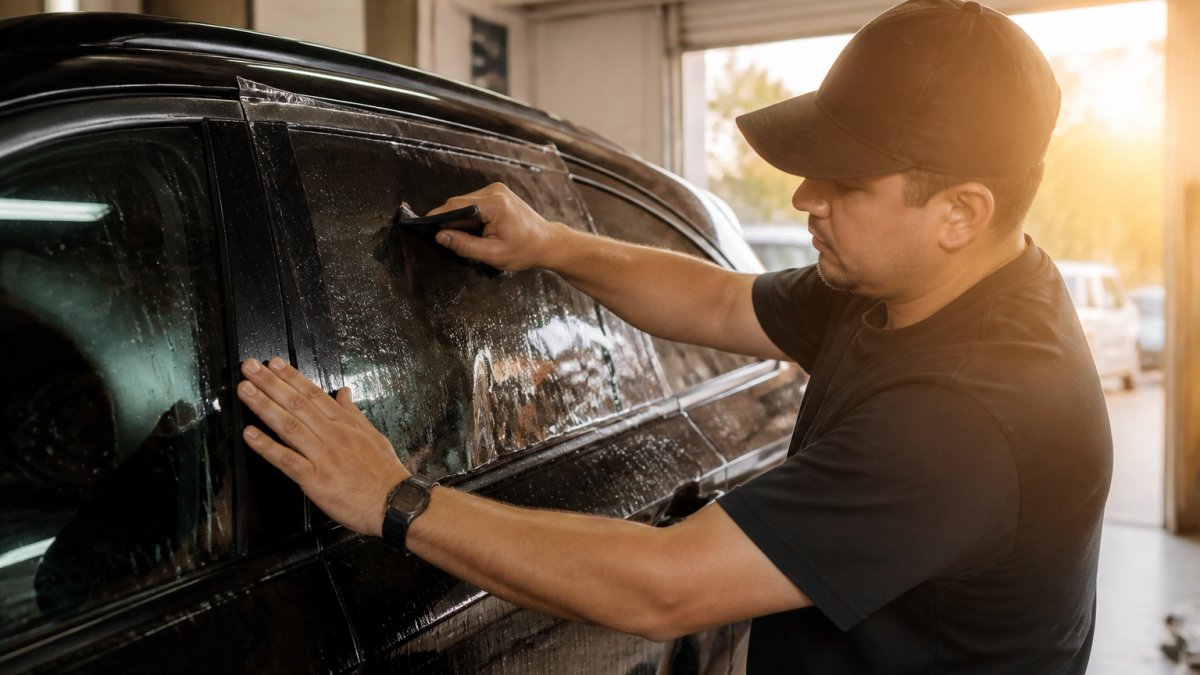
These are the benefits of heat rejection window tint for cars that drivers actually notice. We hear the same feedback from customers again and again.
- A cooler cabin on hot days, especially after the car sits in the sun.
- Less glare from headlights, low sun, and bright pavement.
- UV protection for your skin and your interior.
- Reduced fading on leather, vinyl, and fabric.
- Less strain on the AC, which can help with fuel use over time.
- A cracked dashboard and seats stay intact longer.
- Better privacy without going limo-dark.
UV-Ray Blocking and Interior Protection
Ultraviolet radiation is the quiet destroyer of car interiors. It fades dashboards, cracks leather, and bleaches fabric.
Quality window film blocks the vast majority of UV rays. That protection is built into the film itself, not just the darkness. A clear window film can still block UV, which surprises a lot of drivers.
The payoff is simple. Your vehicle interior lasts longer and looks better when you sell or trade it.
Passenger Comfort and Glare Reduction
Glare is the benefit people feel first. Low sun through the windshield or side glass makes driving harder, and bright pavement tires your eyes on long trips.
Heat rejection film cuts that glare without turning the cabin into a cave. For a deeper look at how this works behind the wheel, our guide on whether window tint reduces glare covers the practical side.
Passengers in the back seat benefit too, especially kids and anyone sensitive to bright light.
Ceramic Tint Heat Rejection: The Performance Leader
Ceramic tint heat rejection is the top of the line. Nano-ceramic film uses tiny ceramic particles to reflect infrared heat while staying clear.
That means you get strong heat rejection without a dark, blacked-out look. It also won't interfere with cell signals or GPS, which older metallic films sometimes did.
Truck owners often ask us about this, and our ceramic tint guide for trucks dives into the specifics. For most drivers who want real heat relief, ceramic is the film we recommend first.
Best for: drivers who want maximum heat rejection with a factory-clean look.
Skip if: budget is the only factor and you mainly want privacy.
Carbon Tint vs Regular Tint: How Film Types Compare
Carbon tint vs regular tint comes down to how each film is built and how that construction handles solar energy. The table below is a starting point, but the mechanism behind each row matters more than the label.
| Film Type | How It Handles Heat | Color Stability | Typical Trade-off | Best For |
|---|---|---|---|---|
| Regular dyed | Absorbs heat into the glass and film | Can fade or turn purple over time | Low cost, but heat soaks into the glass and can raise surface temperature | Tight budgets, short-term ownership |
| Carbon | Blocks a portion of infrared energy with a carbon layer | Stays true longer than dyed | Better heat control than dyed, but not the top performer | Daily drivers who want value |
| Metallic | Reflects heat using a metal layer | Stable, but can interfere with some signals | Strong heat rejection, but may affect cell, GPS, or toll transponder reception in older films | Drivers who prioritize reflection over connectivity |
| Nano-ceramic | Reflects infrared with ceramic nanoparticles | Very stable | Highest cost, best heat rejection without signal interference | Maximum heat rejection and a factory-clean look |
Here is what most guides miss: the film's construction, not its darkness, determines how it handles heat.
A cheap film that bubbles or turns brown costs more in the long run than doing it right once. If you want to judge film quality before you buy, read our guide on how to identify high quality window film.
Reading the Numbers: TSER, IR Rejection, UV Rejection, and VLT
Film specs confuse a lot of buyers, so here is the plain version, plus the part most guides leave out: which number actually predicts how the cabin will feel.
- TSER (total solar energy rejection): the share of total solar energy the film blocks across the ultraviolet, visible, and infrared bands. Higher is better for overall heat control.
- IR rejection: how much infrared heat the film reflects or blocks. This is the number that best predicts cabin comfort on a hot day, because most solar heat travels in the infrared band.
- UV rejection: how much ultraviolet radiation is blocked. Quality films block nearly all of it, and this number is usually the least useful for comparing films because most reputable products are close to equal.
- VLT (visible light transmission): how much visible light passes through. Lower VLT means darker glass, which affects privacy and legal compliance more than heat.
Heat rejection and UV rejection are not the same thing. A film can block UV and still let heat through. Check both numbers, and ask for manufacturer test data rather than a sales pitch.
Which Number Best Predicts Real-World Comfort
IR rejection is the closest single predictor of how the cabin will feel, because infrared radiation carries most of the solar heat you notice. TSER is the better number for comparing overall solar control, since it accounts for all three bands. VLT tells you about darkness and privacy, not heat. A film with high VLT (clear) can still have strong IR rejection, which is why clear ceramic films exist.
How to Verify Manufacturer Claims
Percentages from different film lines are not always directly comparable. Test conditions matter: the light source, the angle of incidence, the glass substrate, and the measurement method can all shift the reported number. A common pattern is for manufacturers to report IR rejection at a specific wavelength rather than across the full infrared spectrum, which can make a film look stronger than it performs in a car.
When you compare films, ask three questions:
- At what wavelength was IR rejection measured, and was it a single point or an average across the infrared band?
- Was the film tested on glass, and what type of glass?
- Does the manufacturer publish TSER alongside IR rejection?
A film that publishes TSER and explains its test method is easier to trust than one that leads with a single impressive percentage. The U.S. Department of Energy guidance on window films explains how solar control works in plain terms and why total solar energy matters more than any single band.
Car Window Tint Aftercare: Curing, Cleaning, and Long-Term Value
Car window tint aftercare decides whether your film lasts years or months. Fresh film needs time to cure, so expect small water pockets or haze for the first few days. That's normal.
A few rules we give every customer:
- Wait a few days before rolling windows down
- Clean with a soft cloth and mild soap, never ammonia
- Skip the abrasive pad on the glass
- Park in shade during the curing window
Long-term value adds up. A film that blocks heat and UV protects your interior, reduces AC strain, and keeps resale value up. Poor installation is the main reason film peels or bubbles.
Get a Free Quote for Heat Rejection Tint on Your Vehicle
Choosing the right film is easier when someone who has done it for decades walks you through it. Our team can help you compare options and pick the film that fits your vehicle and budget.
Ready to cool down your cabin? Get auto window tinting in Grandville with nano-ceramic or carbon film. If you want to understand pricing first, see what sets the cost of car window tinting before you book.
Frequently Asked Questions
Does darker window tint reject more heat?
Not necessarily. Tint darkness is measured by visible light transmission (VLT), which describes how much light passes through the glass, not how much heat it blocks. A light ceramic film with high total solar energy rejection can outperform a very dark dyed film. When comparing heat rejection tint options, look at TSER and infrared rejection figures rather than shade alone, and check your state's legal VLT limits before choosing a darkness level.
What should you avoid doing after getting car windows tinted?
Skip rolling down the windows for the first few days, usually three to five, while the film cures. Do not clean the glass with ammonia-based products or abrasive pads, and avoid pressing hard on the film or picking at edges. Small water bubbles and a slight haze are normal during curing and typically clear within a few weeks. If edges lift or large bubbles persist after that window, contact the installer rather than fixing it yourself.
Does heat rejection tint block UV rays?
Quality heat rejection films block the vast majority of ultraviolet radiation, often rated above 99 percent UV rejection. That matters because UV rays drive interior fading and sun damage to leather, dashboards, and trim, and they contribute to skin damage on long drives. UV rejection and heat rejection are separate ratings, so check both on the manufacturer's specification sheet before you buy.
How do I verify a manufacturer's heat rejection claims?
Ask for the film's published performance specifications, which list total solar energy rejection, infrared rejection, UV rejection, and VLT for each shade. Reputable manufacturers test to industry standards and print these numbers on the film's data sheet. Compare the numbers across the specific shade you are buying, not the brand's best-case figure, and ask your installer to show the spec sheet for the exact film going on your car.
The heat inside a parked car builds fast, and the right film is the fix that keeps working every sunny day. Signs and Window Tinting LLC has installed premium films since 1992, using proven techniques, a customer-first approach, and a lifetime warranty on our tint work. Get started with Signs and Window Tinting LLC and get a free quote for heat rejection tint on your vehicle.