 blog
7 Heat Reduction Film Benefits for Office Buildings
Last Updated: November 1, 2026
Quick Summary
Heat reduction film is a thin, multi-layer sheet applied to existing office glass that blocks solar energy before it turns into heat inside your building, reflecting and absorbing infrared energy so less passes through the pane. You keep the daylight while cutting peak solar load on your HVAC system.
- Ask for both solar heat gain coefficient and shading coefficient before you buy film.
- Specify film per elevation, since west and south exposures drive afternoon peak load.
- Security film keeps shattered glass bonded to its frame instead of falling in shards.
- Reflective and dual-reflective films give daytime privacy but reverse after dark.
- Compare films on SHGC, visible light transmission, infrared and UV rejection before quotes.
Table of Contents
- How Heat Reduction Film Works on Office Glass
- Office Window Film for Energy Efficiency and Lower HVAC Bills
- Office Window Film for Glare Reduction and Visual Comfort
- Commercial Window Film UV Protection for People and Interiors
- Security, Privacy, and Glass Breakage Protection
- ROI, Sustainability Certifications, and Film Specifications
- Commercial Window Film Installation and Long-Term Maintenance
- Get a Free Quote for Your Office Window Film Project
- Frequently Asked Questions
How Heat Reduction Film Works on Office Glass
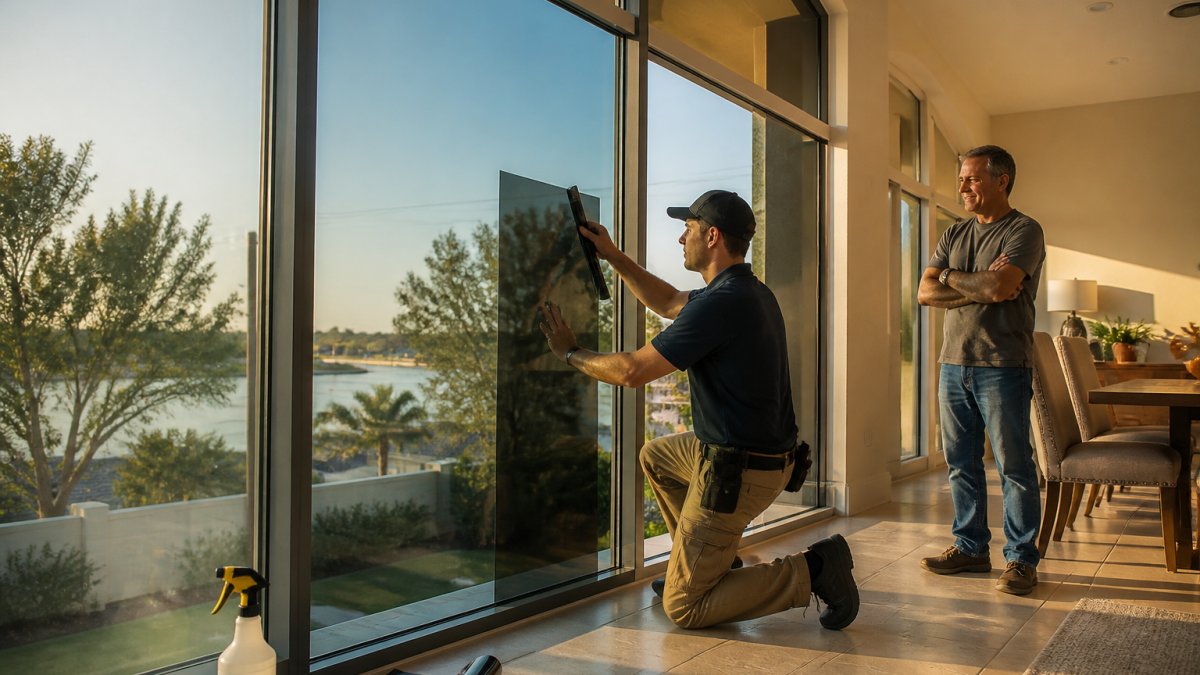
Heat reduction film is a thin, multi-layer sheet applied to existing glass that blocks solar energy before it turns into heat inside your building. Window film reflects and absorbs infrared energy, so less of it passes through the pane. You keep the daylight. You lose the oven effect.
The mechanism matters because office glass is usually the weakest point in the building envelope. Standard clear glass lets most solar energy straight through. Film changes that balance without replacing a single window.
Solar Heat Gain Coefficient and Shading Coefficient Explained
Two numbers decide how much heat a window lets in. Solar heat gain coefficient (SHGC) is the fraction of solar energy that enters through the glass, either directly or absorbed and re-released inward. A lower SHGC means less heat. Shading coefficient is an older ratio that compares a window's solar gain to that of clear glass, which is set at 1.0.
Ask for both numbers before you buy. Ask for both numbers before you buy, since a lower SHGC generally means less solar heat gain.
Office Window Film for Energy Efficiency and Lower HVAC Bills
Cooling costs fall when the glass stops loading your HVAC system. Office window film for energy efficiency works by cutting peak solar load, which is the moment your air conditioning works hardest. Less load means shorter run times and steadier temperatures.
What most guides miss is timing. The savings show up strongest on west and south exposures during afternoon peaks. East-facing glass benefits in the morning. A good installer maps your exposures first, then specifies film per elevation instead of applying one product everywhere.
Office Window Film for Glare Reduction and Visual Comfort
Screen glare is the complaint we hear most from office tenants. Office window film for glare reduction lowers visible light transmission so monitors stay readable without closing the blinds all day. The goal is balance: enough daylight to work by, not enough to wash out a spreadsheet.
Here is how we approach it:
- Measure the sun path across each facade
- Pick a film with the right visible light transmission for the room's use
- Keep darker films for conference rooms and lighter films for open work areas
- Test a sample pane before committing to the full floor
Glare control also protects workplace productivity. Staff who are not squinting or repositioning monitors all afternoon simply get more done. For a deeper look at solving monitor glare specifically, see our guide on how to stop office glare on monitors.
Commercial Window Film UV Protection for People and Interiors
Ultraviolet radiation is invisible and relentless. Commercial window film UV protection blocks the vast majority of UV rays that would otherwise pass through glass, and that matters for two groups: people and furniture.
For people, UV exposure adds up for anyone seated near a window for hours. For interiors, UV is the main cause of fading in upholstery, carpet, artwork, and wood finishes. Fading protection is not just about color. It is about replacement cost. A faded reception sofa or sun-bleached floor is an expense you avoid by blocking the source.
Optical clarity separates good film from cheap film.
Security, Privacy, and Glass Breakage Protection
Safety film holds shattered glass together. When glass breakage happens, whether from an accident, a break-in attempt, or storm pressure, standard glass falls in dangerous shards. Security film keeps the pane bonded to its frame, so the glass cracks but stays in place.
Privacy is the other half of the story. Reflective and dual-reflective films create daytime privacy, so people outside cannot see in while occupants still see out. That suits street-level offices, medical suites, and any space where confidentiality matters.
Watch out: privacy film works differently after dark. When interior lights are brighter than the outside, the effect reverses. Pair film with blinds or interior shades if you need round-the-clock privacy.
ROI, Sustainability Certifications, and Film Specifications
Retrofit film is one of the few building upgrades that pays back without a construction project. The ROI case rests on three lines: lower cooling costs, reduced fading and replacement expense, and avoided window replacement. Compare the installed cost against your annual energy spend on cooling, and the math usually favors film on problem facades.
How to Build a Payback Estimate
A credible payback estimate starts with your utility bills, not a vendor's brochure. Pull twelve months of electric statements and isolate the cooling portion, the summer months where kWh climbs with outdoor temperature. Then estimate the share of that cooling load attributable to solar gain through glass. Most practitioners find that west and south facades drive a disproportionate share of afternoon peak load, so a per-elevation estimate is more honest than a whole-building average.
The formula is straightforward:
- Annual cooling spend attributable to glass = total cooling kWh × share attributable to solar gain × your blended electric rate
- Estimated annual savings = that figure × the film's modeled reduction in solar heat gain
- Simple payback (years) = installed cost ÷ estimated annual savings
Use qualified language in your own model and validate against a post-installation utility comparison after the first full summer.
Do not overlook the non-energy lines. Fading and replacement expense for upholstery, carpet, artwork, and wood finishes is real budget that film protects. Avoided window replacement is the largest single line on many older buildings, because film retrofits existing glass at a fraction of the cost of a glazing replacement project.
Sustainability Certifications and Documentation
Sustainability certifications reward this work, and the documentation matters as much as the installation. Energy modeling tools tied to ENERGY STAR building guidance help you document reduced loads, and film can support points under the U.S. Green Building Council's LEED rating system for existing building performance.
For property managers pursuing certification, the practical steps are:
- Retain the manufacturer's performance data sheets showing SHGC, visible light transmission, UV rejection, and infrared rejection for each specified product
- Keep installation records by elevation so the modeled savings can be traced to actual work
- Document pre- and post-installation utility data to support performance claims
- Coordinate with your commissioning or energy consultant early, because certification credit pathways differ by rating system version
Film Types and Technical Specifications to Compare
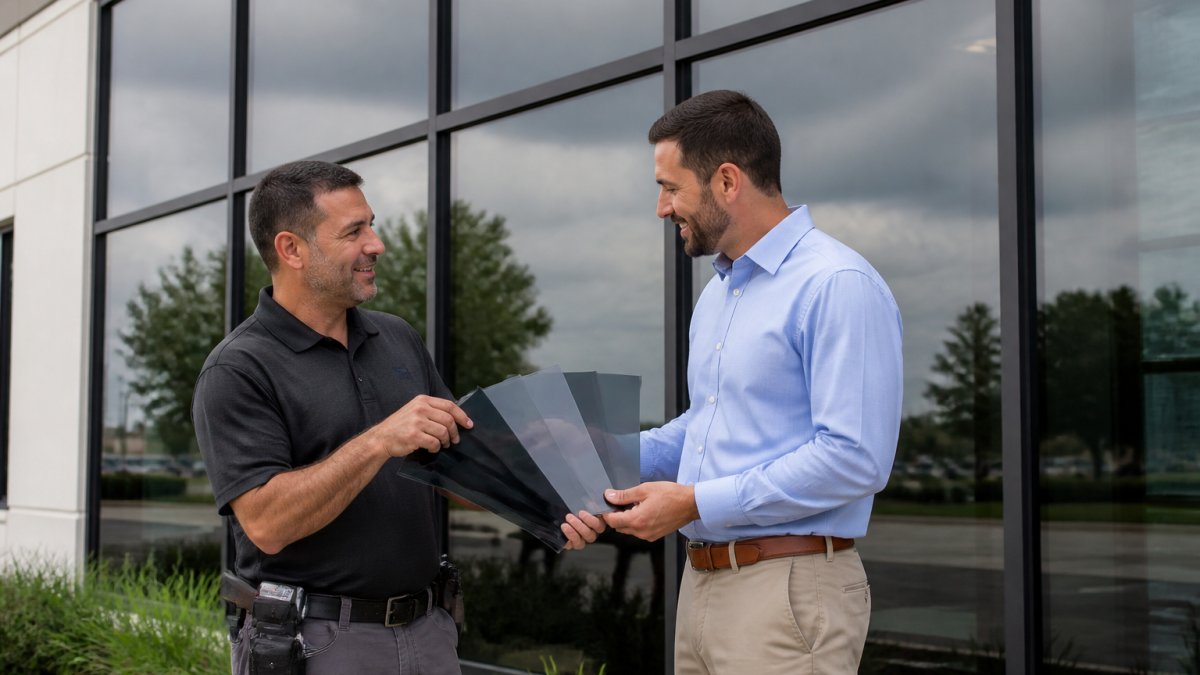
Specifications decide performance, so compare films on paper before you compare quotes. Our commercial window film selection guide walks through the trade-offs in detail. Here is the short version:
| Specification | What It Controls | What to Ask For |
|---|---|---|
| Solar heat gain coefficient | Total heat admitted | Lower value for hot exposures |
| Visible light transmission | Daylight and glare | Match to room use |
| Infrared rejection | Radiant heat blocked | High rejection for west glass |
| UV rejection | Fading and skin exposure | Maximum available |
| Shading coefficient | Solar gain vs. clear glass | Under 0.5 for strong control |
Ceramic and spectrally selective films give strong heat rejection with high optical clarity. Dyed films cost less but fade faster. Metalized films reject heat well but can interfere with cell signals, so check before specifying them near dead zones.
Commercial Window Film Installation and Long-Term Maintenance
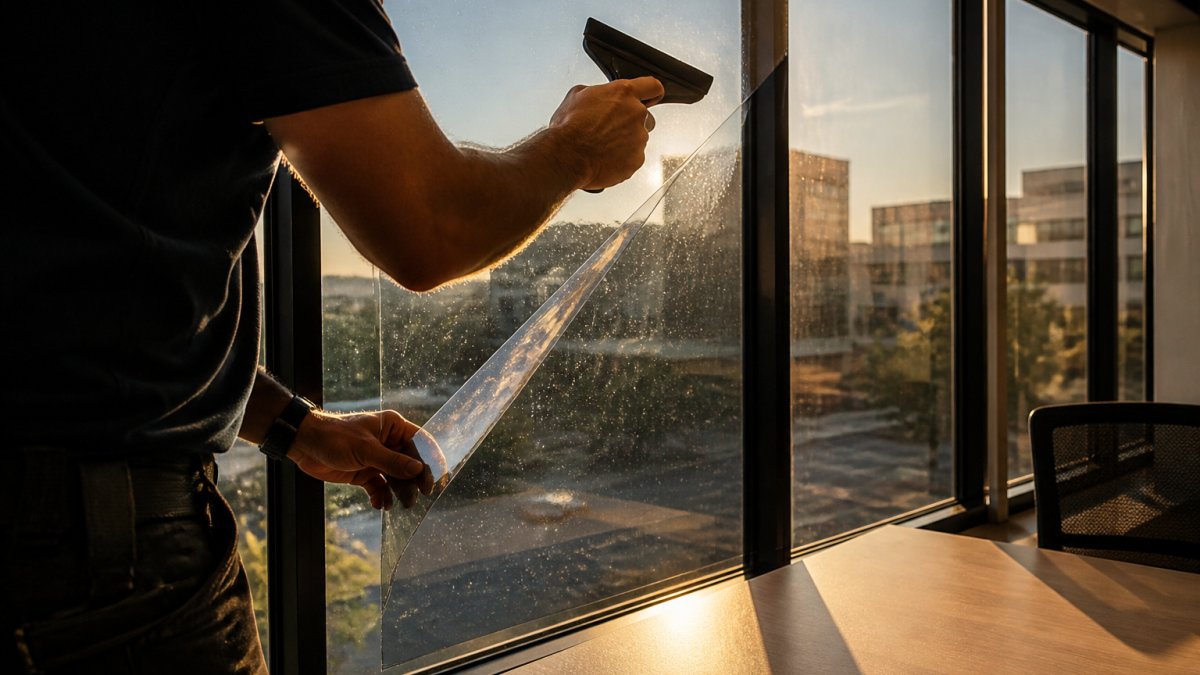
Commercial window film installation involves preparing the glass, applying the film, and allowing it to cure before it fully clears.
What Commercial-Grade Installation Involves
Commercial projects differ from residential work in scale and sequencing.
Lifespan and Warranty Expectations
Commercial-grade films are built to last far longer than consumer products, but lifespan depends on film type, exposure, and installation quality. Most manufacturers publish warranty terms that vary by product line and application, so read the warranty document rather than the sales sheet. A common pattern is that ceramic and spectrally selective films carry longer warranties than dyed films, because dyed films are more susceptible to fading and color shift under sustained sun exposure.
Long-Term Maintenance That Protects the Investment
When you are ready to move from planning to scheduling, you can schedule your project with us.
Get a Free Quote for Your Office Window Film Project
Every building has its own sun exposures, glass types, and comfort complaints. A generic film package will miss half of them. The right approach is a walkthrough: we look at each facade, measure the problem areas, and recommend film by elevation and room use.
Signs and Window Tinting LLC brings more than 35 years of experience, with premium films and proven installation techniques. The business offers commercial window tinting. If you want the technical background first, read our guide to commercial window film for heat reduction, then request pricing for your space.
Summer heat on office glass is a solvable problem. Signs and Window Tinting LLC offers commercial window tinting. Our commercial window tinting service helps reduce heat and glare, block harmful UV rays, and improve privacy and energy efficiency. Get started with Signs and Window Tinting LLC and request a free quote for your office window film project today.
Frequently Asked Questions
Does heat reduction film actually lower office air-conditioning costs?
Yes, when the film is matched to the glass and the sun exposure. Heat reduction film lowers the solar heat gain coefficient of the window, which cuts the solar load your HVAC system has to remove. The savings depend on how much glass faces direct sun, your climate, and your current glazing. Buildings with large west- or south-facing windows and older clear glass see the biggest change. Ask for the film's performance data and compare it to your existing glass before you commit.
How long does commercial window film last before it needs replacing?
Warranty terms and expected film life vary by product, so review the manufacturer's warranty document for the specific film. Actual life depends on the film type, sun exposure, glass orientation, and how the film is cleaned.
Can window film be installed on existing office windows without replacing the glass?
In most cases, yes. Commercial window film installation is a retrofit solution, so it goes directly onto the interior surface of your existing glass.
What type of film works best for glare reduction in an office?
Glare control comes down to visible light transmission. A film that blocks too much light can make the space feel dim, so the goal is a balance between cutting glare on monitors and keeping daylighting. Ask for the VLT rating and test a sample on one window before covering a whole floor.