 how-to
Can You Stop Sun Damage to Car Leather Seats?
Last Updated: November 2, 2026
Quick Summary
You can stop sun damage car leather by cutting direct sunlight, blocking UV rays, and keeping the material moisturized. Park in shade, use a UV-blocking windshield sunshade, add window tint, and condition seats every two to three months. No single step does it all, so combine several habits.
- UV rays break down the protective oils in leather, while heat speeds up drying and cracking.
- Quality window tint is the single most effective way to slow sun damage to leather interiors.
- Condition seats every two to three months, or monthly in hot, sunny climates or if the car sits outside.
- Patch test any new product on a hidden spot and wait 24 hours before full use.
- Never use all-purpose cleaner, dish soap, or alcohol wipes on coated leather because they strip the topcoat.
Table of Contents
- How Sun and UV Exposure Damage Car Leather
- How to Protect Leather Car Seats from Sun
- Car Window Tint UV Protection for Leather Interiors
- How Often to Condition Leather Car Seats
- How to Repair Faded or Cracked Leather Car Seats
- A Step-by-Step Prevention Routine for Your Car Interior
- Get a Free Quote for UV-Blocking Window Tint
- Frequently Asked Questions
How Sun and UV Exposure Damage Car Leather
Sun damage car leather is the breakdown of the material's oils, dyes, and finish caused by ultraviolet exposure and heat.
Here's what happens. UV rays hit the leather and break down the protective oils that keep it supple.
The damage shows up in stages:
- Fading and discoloration on the top edges and headrests first
- Drying that makes the surface feel stiff or rough
- Surface cracking in the seams and bolsters
Light-colored leather shows fading fastest. For a deeper look at preventing cracks, see our guide on how to prevent car leather from cracking.
How to Protect Leather Car Seats from Sun
You can protect leather car seats from sun by cutting direct sunlight, blocking UV rays, and keeping the material moisturized. No single step does it all. The owners who keep their interiors looking new combine several habits.
Start with the easiest wins first.
Parking in Shade and Using Windshield Sunshades
Shade parking is the cheapest protection you have. A covered garage, a carport, or even the shadow of a building cuts ultraviolet exposure for hours at a time. When shade isn't available, a windshield sunshade does real work. A UV-blocking sunshade keeps direct sunlight off the dashboard and front seats, which are the hardest-hit areas.
A common mistake is skipping the sunshade for short stops. Ten minutes here and there adds up over a summer.
UV Protection Beyond the Windshield
Your side and rear windows let in plenty of UV rays too. That's why window protection matters across the whole cabin, not just the front. Interior ceramic protection is the other half of the equation. A nano-ceramic coating for leather, vinyl, and upholstery repels spills and blocks UV fading on the surfaces window film can't reach. You can explore interior ceramic protection for that layer of defense.
Car Window Tint UV Protection for Leather Interiors
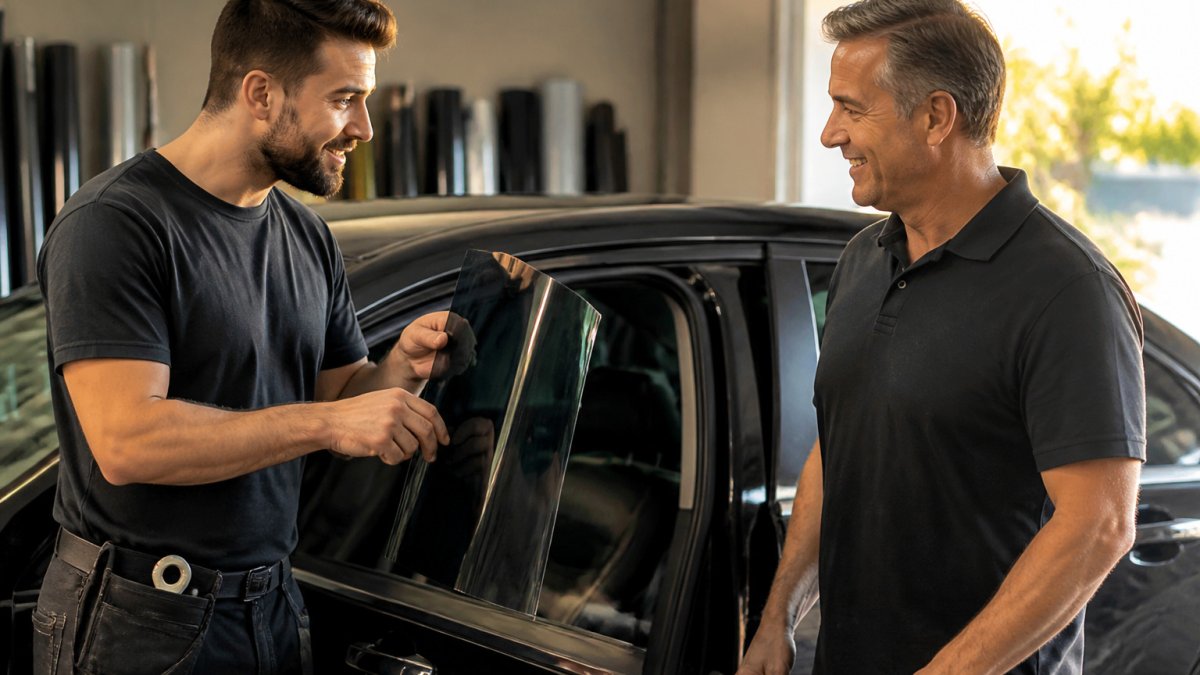
Car window tint UV protection is the single most effective way to slow sun damage to leather interiors.
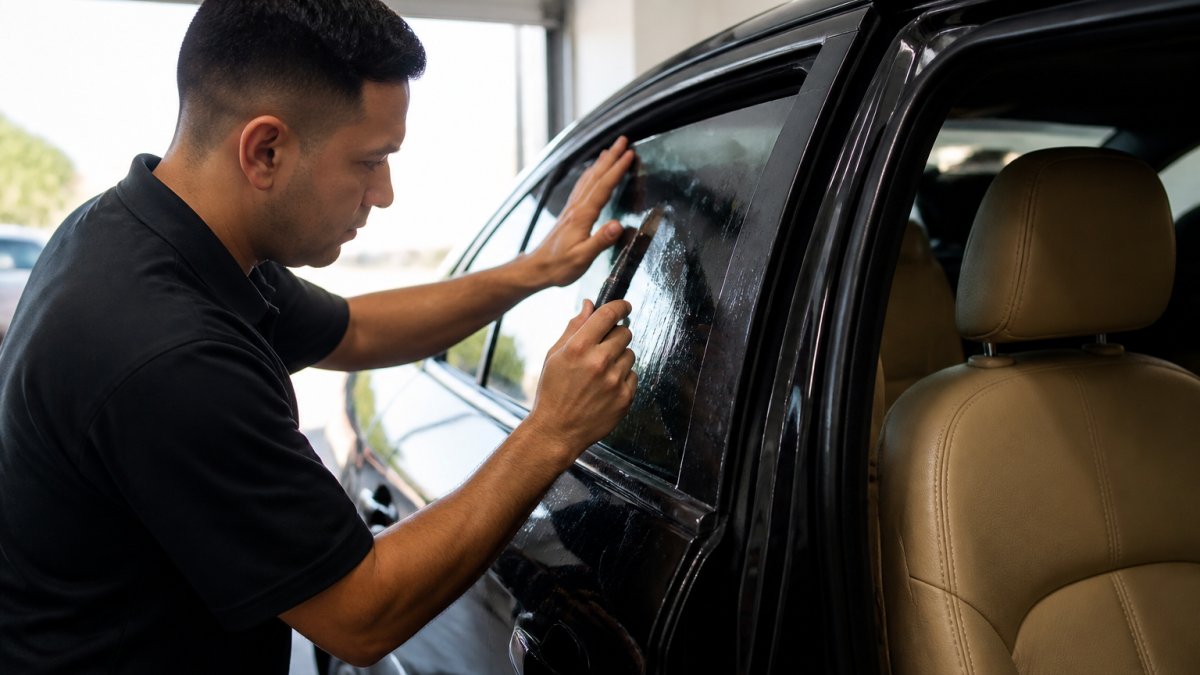
The type of film matters here. If you want the full breakdown of how film works, read our guide on whether window tint blocks UV rays.
Signs and Window Tinting LLC was founded in 1992 and offers automotive window tinting. Tint does more than protect leather.
How Often to Condition Leather Car Seats
Condition leather car seats every two to three months under normal use, and monthly in hot, sunny climates or if the car sits outside. Conditioning replenishes oils and keeps the leather from drying out between cleanings. If the seats are only lightly used and the car is garaged, every three to four months is usually enough, over-conditioning can leave a greasy film that attracts dust and transfers to clothing.
Watch for the signs that you're behind schedule:
- The surface feels dry or stiff
- Color looks dull instead of rich
- Fine lines appear in the creases
Identify Your Upholstery Before You Buy Anything
Care products and methods vary by material, and using the wrong one can do more damage than the sun. Before you condition, confirm what you're actually sitting on:
- Genuine (full-grain or top-grain) leather, natural grain, soft hand, absorbs conditioner slowly, and darkens slightly when wet. Needs pH-balanced leather soap and a cream or lotion conditioner.
- Coated or finished leather, most automotive leather falls here. A pigment and clear topcoat sit over the hide, so the surface feels uniform and slightly plastic. Clean with a mild leather-safe cleaner and protect the coating; heavy oils can cloud the finish.
- Synthetic upholstery (vinyl, leatherette, polyurethane), no pores, uniform texture, often cooler to the touch. Use vinyl-safe cleaners and UV protectants, not leather conditioners, which can leave a tacky residue.
A quick check: place a drop of water on a hidden area. If it beads and sits on top, the surface is coated or synthetic. If it darkens and absorbs slowly, it's likely genuine leather. When in doubt, check the window sticker, owner's manual, or door-jamb trim code.
Choosing Leather-Safe Products and Patch Testing
Not every cleaner belongs on leather. Leather-safe products are formulated to clean without stripping the finish.
Read the label for three things: pH balance (near neutral is safest), a statement that it's safe for coated leather, and a UV-protectant claim. Skip products that promise to "restore" without naming the material, those are often dye-heavy and can shift color.
Patch test first. Apply a small amount to a hidden spot, under the seat, on the back of a headrest, or in a seam allowance, and wait 24 hours.
A simple product routine:
- Leather soap for regular cleaning
- Leather conditioner or leather cream for moisturizing
- Microfiber cloth for application and buffing
Buff off excess product after 10-15 minutes. If the surface feels greasy the next day, you used too much, wipe it down with a clean, dry microfiber cloth.
How often you condition depends on how the car is used and where it sits.
| Situation | Conditioning frequency | Note |
|---|---|---|
| Normal use | Every two to three months | Replenishes oils between cleanings |
| Hot, sunny climates or car sits outside | Monthly | Extra heat and sun dry leather faster |
| Lightly used and garaged | Every three to four months | Over-conditioning can leave a greasy film |
How to Repair Faded or Cracked Leather Car Seats
Minor fading and light surface cracking can often be improved at home with a leather reviver and consistent conditioning. Deep cracks, tears, and color loss usually need professional repair or reupholstery. The trick is knowing which category you're in before you spend money on products.
Judge the Severity First
Run a fingernail test along the worst crease. If the surface feels rough but the leather flexes without splitting, it's surface damage, home care can help. If the crack catches your nail or you can see a lighter layer underneath, the topcoat is breached and conditioner alone won't fix it. If the crack opens when you press the seat, the hide is failing and needs professional attention.
A simple severity scale:
- Stage 1, dull, dry, light fading: condition and protect; no repair needed.
- Stage 2, surface cracking in creases, color loss on bolsters: clean, revive, and condition; expect improvement, not perfection.
- Stage 3, cracks that catch a nail, visible substrate: professional filler and refinish.
Home Repair for Stage 1 and Stage 2
Try this order for existing damage:
- Clean gently with leather soap and a microfiber cloth
- Remove abrasive grit and dust from the seams with a soft brush
- Apply a leather reviver to restore color and suppleness, test on a hidden spot first
- Condition to lock in moisture
- Repeat monthly and watch for improvement
Work the reviver into the crease with a foam applicator rather than wiping across it. Color-matched revivers are available for common interior shades, but a close match applied thin beats an exact match applied heavy. Let each coat dry fully before judging the result.
When to Call a Professional
If the cracks are deep, the leather feels brittle, or the color loss covers a large panel, home care won't fix it. A professional can assess whether repair or replacement makes sense.
Signs it's time to call:
- Cracks that open when the seat flexes
- Tears at seams or bolsters
- Color loss that a reviver can't hide after two applications
Ask the shop whether they repair or replace, what warranty they offer on the refinish, and whether they'll match the sheen of the surrounding panels. A repair that looks right in the shop but glossy in daylight is a common complaint.
Stop the Damage From Coming Back
Repair without prevention is temporary. Once the seat is repaired or revived, use a sunshade and keep up the conditioning schedule. The repaired area is often the most sun-exposed part of the seat, so it needs the same protection as new leather, and a little more attention during the first month after repair.
A Step-by-Step Prevention Routine for Your Car Interior
Here's the routine we'd follow to stop sun damage car leather before it starts. It takes a few minutes a week and a couple of hours a season.
- Park in shade whenever you can
- Use a UV-blocking windshield sunshade every time you park outside
- Wipe down seats weekly with a dry microfiber cloth to remove dust and grit
- Clean monthly with leather soap to lift sunblock residue, sweat, and stains
- Condition every two to three months to replenish oils
- Patch test any new product before full use
- Check the seams and bolsters for early cracking
- Add window tint for year-round UV protection
Two things most guides miss. First, sunblock residue and sweat break down leather over time, so clean them off rather than letting them sit. Second, color transfer from clothing on light-colored leather needs prompt attention.
Want the full routine with product picks? Our step-by-step leather protection checklist covers it.
Get a Free Quote for UV-Blocking Window Tint
Window film can help block the UV rays that damage leather. Signs and Window Tinting LLC has been in business since 1992 and offers automotive window tinting using premium films and installation techniques.
If you're ready to protect your interior, schedule your project with us to request a quote.
Frequently Asked Questions
How do you protect leather car seats from sun damage?
Start by reducing direct sunlight: park in shade or a garage when possible and use a UV-blocking windshield sunshade every time you park outside. Window tint with UV protection cuts the ultraviolet exposure that reaches the seats. Then clean with a leather-safe soap and condition regularly to replenish oils. Wipe off sunblock and sweat promptly, since both can stain and dry the surface. Together these habits limit fading, discoloration, and cracking.
Does car window tint UV protection really help leather seats?
Yes. Window film blocks a large share of the ultraviolet exposure that passes through untreated auto glass, and UV rays are the main driver of fading and surface damage. Tint also lowers interior heat, which slows the drying that leads to cracking. Quality film installed correctly keeps working for years, so it protects leather upholstery every day the car sits in the sun, not just when you remember a sunshade.
How often should you condition leather car seats?
For most vehicles, condition every two to three months. In hot, sunny climates or if the car parks outside daily, move to every four to six weeks. Condition more often in summer and less in mild weather. Clean first with a leather-safe soap so the conditioner reaches the surface instead of sitting on dust and grit. Always patch test a hidden area before applying any product across the whole seat.
Can you repair sun-damaged leather car seats?
Fading and light surface cracking often improve with cleaning and conditioning, which restore moisture and even out the finish. Deeper cracks, tears, or color loss usually need a leather reviver, dye, or professional repair. Distinguish genuine leather from coated leather and synthetic upholstery first, because each takes different products. Repair stops the damage from spreading, but preventing further UV exposure with tint and sunshades is what keeps the fix from failing.
Sun damage doesn't wait, and every summer of unprotected leather makes the cracks harder to reverse. Signs and Window Tinting LLC offers premium films, expert installation, and a customer-first approach built over 35 years. Get started with Signs and Window Tinting LLC and keep your leather looking new for years to come.