 how-to
Why Vehicle Wraps Start Peeling: Causes and Solutions
Table of Contents
- Common Causes of Vehicle Wrap Peeling
- Environmental Factors That Damage Vinyl Wrap Adhesion
- How to Fix Peeling Vinyl Wrap: Safe Repair Steps
- Can You Wrap a Car With Peeling Paint
- Car Wrap Lifespan and Signs of Aging
- Car Wrap Care and Maintenance: Prevention Strategies
- Warranty Coverage and Installer Responsibility
- Frequently Asked Questions
Last Updated: October 5, 2026
Common Causes of Vehicle Wrap Peeling
Vehicle wraps fail for specific reasons. Most peeling comes down to three culprits, installation quality, surface preparation, and paint condition. Understanding why vehicle wraps start peeling helps you avoid costly mistakes.
Poor Installation Quality and Edge Adhesion
Bad installation is the leading cause of peeling vinyl wrap. When technicians rush, edges lift within weeks, adhesive needs time and pressure to bond.
Edge adhesion matters most. Edges not pressed down firmly catch wind, road debris, and moisture; once an edge lifts, water gets underneath and breaks the seal.
Common installation mistakes include:
- Applying wrap too quickly without letting adhesive set
- Not using enough heat to activate the adhesive properly
- Failing to smooth out air bubbles and wrinkles
The difference between a wrap lasting five years and one peeling in six months comes down to installation care.
Inadequate Surface Preparation and Cleaning
Your vehicle's surface must be spotless before wrap application. Dirt, wax, grease, and contaminants prevent adhesive from bonding, so an unclean surface will peel.
Surface prep takes time: wash off loose dirt, then degrease to eliminate wax and oil buildup. Dealer protective coatings must also be removed, skip this and the wrap sits on a slippery layer instead of bonding to paint.
Contamination that causes peeling includes:
- Road salt and de-icing chemicals
- Wax or protective coatings from the dealership
- Grease from handling or nearby machinery
Professional installers spend 30-60 minutes cleaning a vehicle properly. That time is the foundation for adhesion.
Paint or Surface Condition Issues
Your paint condition directly affects wrap adhesion. If paint is peeling, cracked, or failing, the wrap won't stick.
Existing paint problems create weak adhesion points. When paint chips or flakes, the wrap loses its anchor, and temperature changes worsen it because wrap and paint expand at different rates.
Signs of paint problems before wrapping:
- Clear coat peeling or flaking off
- Paint bubbling or blistering
- Rust spots or oxidation
The hard truth: you cannot wrap a car with peeling paint and expect good results, the wrap only lasts as long as the paint underneath.
Environmental Factors That Damage Vinyl Wrap Adhesion
Heat, sun, and moisture attack vinyl wrap adhesion constantly. Sun fades colors and weakens adhesive, temperature swings cause expansion and contraction, and humidity and road salt accelerate breakdown. No wrap lasts forever, but environmental protection extends its lifespan.
Heat and Temperature Fluctuations
Heat is the enemy of vinyl wrap adhesion. High temperatures soften the adhesive; the wrap expands in sun and contracts at night, stressing the bond, especially at edges.
Seasonal temperature swings are particularly damaging. Wrap material and vehicle metal expand and contract at different rates, creating tension at seams and edges where peeling starts.
Parked in direct sun all day makes things worse, a dark vinyl wrap in summer can reach 140-160 degrees Fahrenheit, weakening adhesive.
Areas most vulnerable to heat damage:
- Roof panels (direct sun exposure)
- Hood and trunk (high heat concentration)
- Doors facing the sun
Sunlight and UV Ray Exposure
UV rays break down vinyl material and adhesive over time, every day in the sun degrades the wrap slightly.
UV damage appears as color fading and adhesive weakening: the wrap may look fine but feel loose at the edges. Wraps in sunny climates fail faster than in cloudier regions.
The damage is cumulative and irreversible. You can only slow it by minimizing sun exposure and using quality protective films.
Humidity and Weather Exposure
Moisture is the silent killer of wrap adhesion. Humidity, rain, and morning dew penetrate edges and seams; once water gets under the wrap, it breaks the adhesive bond from underneath while the top still looks fine.
Road salt and de-icing chemicals make this worse, attacking the adhesive directly. Vehicles in coastal areas or harsh-winter regions see faster wrap failure.
Weather exposure that damages wraps:
- Heavy rain seeping under edges
- Road salt spray in winter
- De-icing chemical exposure
Vehicles in wet climates need extra edge protection. Proper sealant at all edges prevents water infiltration; without it, moisture eventually finds its way under the wrap.
How to Fix Peeling Vinyl Wrap: Safe Repair Steps
Small peeling edges can be resealed if caught early. This saves money and extends wrap life. But not all peeling can be fixed safely. Knowing when to repair versus replace is crucial.
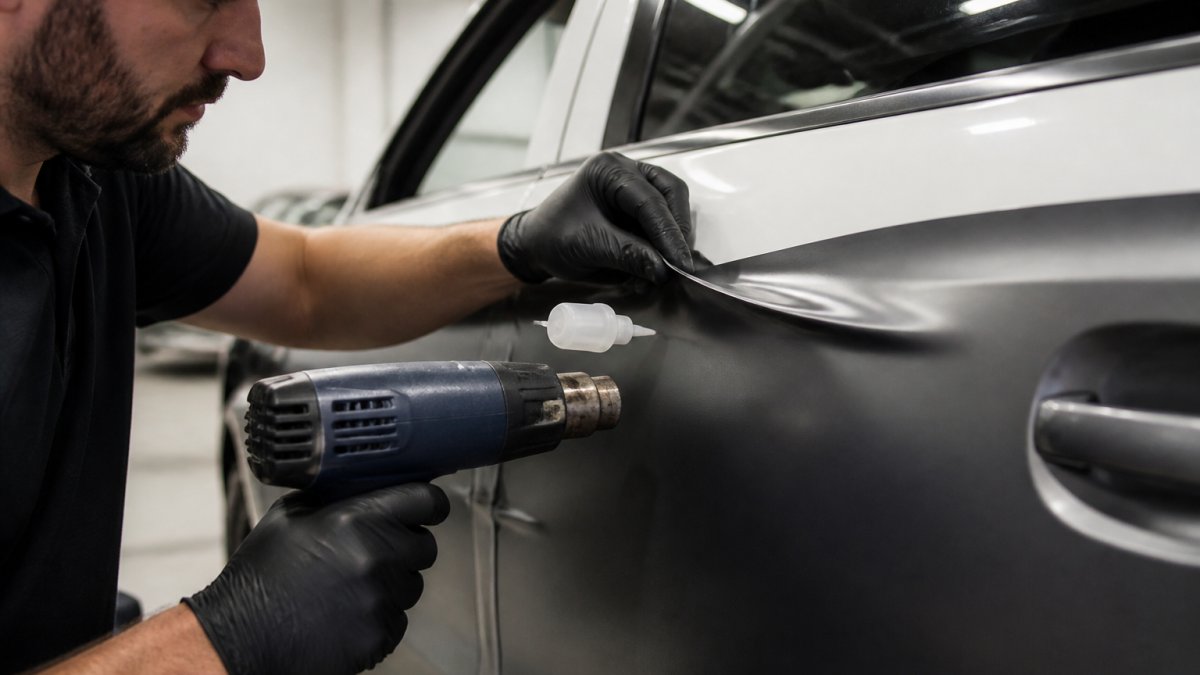
Diagnosing the Peeling Problem
First, determine what's actually peeling: the wrap itself, or the paint underneath? This changes your repair approach completely.
Gently lift a peeling corner with your fingernail. If the wrap comes away easily, the adhesive has failed.
Diagnosis steps:
- Inspect all edges and seams for lifting
- Gently test adhesion by pressing on suspected areas
- Check for water or moisture under the wrap
Small peeling edges (less than one inch) can often be resealed. Large areas of peeling or peeling that exposes failing paint usually require full replacement.
Resealing Small Lifted Edges
If only the edges are lifting and the paint underneath is solid, resealing may work. You'll need vinyl adhesive, a heat gun, and patience.
Clean the lifted edge thoroughly, removing dirt, moisture, and old adhesive residue. Warm the vinyl gently with a heat gun, apply fresh vinyl adhesive underneath, then press firmly with a roller until it sets.
The process takes time:
- Clean the lifted area with rubbing alcohol and let dry completely
- Warm the vinyl gently with a heat gun (not too hot)
- Apply vinyl-specific adhesive under the lifted edge
- Press down firmly with a roller or squeegee
- Maintain pressure for at least 5-10 minutes
- Allow 24 hours for adhesive to cure before washing
This works best on small areas. Large peeling sections or peeling that exposes paint damage usually cannot be fixed this way.
When to Replace Instead of Repair
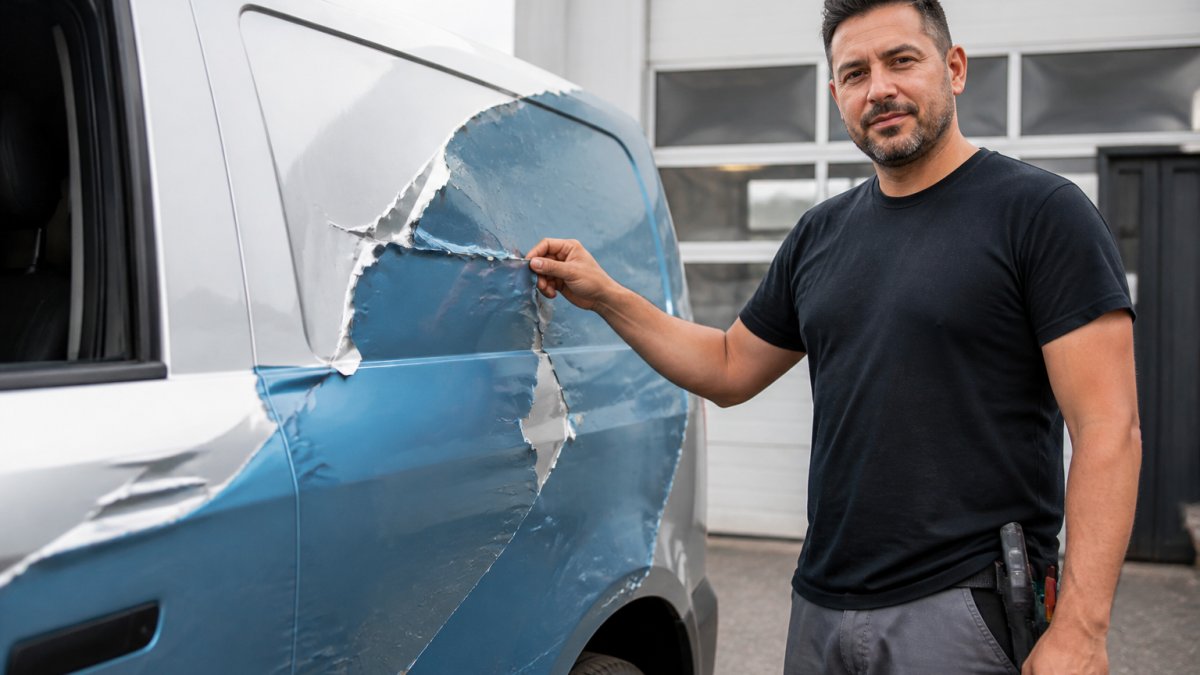
Most peeling wraps cannot be safely repaired. If peeling is extensive, paint is damaged underneath, or moisture has gotten under the wrap, replacement is the only real solution.
Replace the wrap when:
- Peeling covers more than a few small areas
- Paint is flaking or damaged under the wrap
- Water or moisture is visible under the wrap
Repairing a wrap that needs replacement wastes time and money. A new wrap costs more upfront but lasts longer and looks better than a patch.
Can You Wrap a Car With Peeling Paint
The short answer is no. Wrapping a car with peeling paint sets you up for failure, the wrap only lasts as long as the paint underneath, and peeling paint is already failing.
Peeling paint is no longer bonded to the vehicle, so the wrap bonds to the peeling paint rather than the metal underneath.
The paint must be in good condition before wrapping. If it's peeling, address it first. This might mean:
- Sanding down to bare metal and repainting
- Stripping the failing paint and applying new primer and paint
- Addressing rust or corrosion underneath
This costs money upfront but is necessary. A wrap over failing paint peels within months, so you'll pay for a wrap that doesn't last plus the paint fix anyway.
Car Wrap Lifespan and Signs of Aging
Quality vinyl wraps last 5-7 years with proper care, sometimes longer in ideal conditions. Most fail sooner due to poor installation, inadequate maintenance, or harsh environmental exposure.
The wrap's lifespan depends on several factors:
- Installation quality (biggest factor)
- Vinyl quality (premium vinyl lasts longer)
- Climate and sun exposure
- Paint condition before wrapping
Signs your wrap is aging and may fail soon:
- Color fading, especially on edges and seams
- Edges starting to lift or peel
- Adhesive feeling loose when pressed
- Visible cracking or small tears
Once aging starts, failure accelerates. A wrap showing these signs will likely peel completely within months. Plan for replacement before it becomes a problem.
Car Wrap Care and Maintenance: Prevention Strategies
Proper care extends wrap lifespan significantly. Most wrap owners don't maintain their wraps adequately. Simple preventive steps can add years to your wrap's life.
Maintenance prevents most common peeling problems. Regular washing removes contaminants. Protective measures shield the wrap from harsh conditions. Avoiding damaging practices keeps the wrap in good condition.
Proper Washing and Cleaning Techniques
Wash your wrapped vehicle regularly but carefully, using soft brushes or microfiber cloths rather than harsh abrasives.
Washing removes road salt, de-icing chemicals, and contaminants that attack adhesive. Wash at least monthly, more often in harsh climates.
Safe washing steps:
- Use cool or lukewarm water (not hot)
- Apply gentle soap designed for vinyl wraps
- Wash with soft brushes or microfiber cloths
- Avoid pressure washers (water pressure can force moisture under edges)
Never pressure wash a wrapped vehicle. The high-pressure water forces moisture under edges and seams, causing peeling. Hand washing takes longer but protects your wrap.
Protecting High-Risk Areas: Doors, Bumpers, and Seams
Certain areas peel first because they move or experience more stress. Doors open and close. Bumpers take impacts. Seams are natural weak points. These areas need extra protection.
Protect high-risk areas by:
- Parking in shade when possible (reduces heat stress)
- Using a car cover in harsh climates
- Avoiding door slamming or rough handling
- Keeping bumpers clear of obstacles
Seams are particularly vulnerable, as wrap edges there are exposed to moisture and temperature changes. Regular inspection catches peeling before it spreads.
Warranty Coverage and Installer Responsibility
Quality installers stand behind their work. Most reputable wrap shops offer warranties covering peeling and adhesion failure.
Typical warranty coverage includes:
- Adhesion failure due to installation defects (usually 1-2 years)
- Seam separation caused by poor installation
- Edge peeling from installation problems
Warranties usually do NOT cover:
- Damage from poor maintenance or improper washing
- Peeling caused by paint failure
- UV fading (this is normal aging)
- Damage from pressure washing or harsh chemicals
The installer's responsibility is limited to their work quality.
Ask about warranty coverage before installation and get it in writing. A shop that won't warrant their work may be cutting corners on installation quality.
Peeling vehicle wraps are frustrating, but most peeling is preventable.
At Signs and Window Tinting LLC, we've installed thousands of vehicle wraps that last years without peeling. The difference comes down to quality installation, proper surface preparation, and customer maintenance.
Frequently Asked Questions
Why is my vehicle wrap peeling at the edges?
Peeling at edges typically results from poor installation technique, inadequate surface preparation before wrapping, or exposure to extreme heat and humidity. The adhesive breaks down when the vinyl expands and contracts with temperature changes, or when contaminants were trapped under the film during installation. High-traffic areas like doors and bumpers are most vulnerable because they flex and experience more temperature fluctuation than flat panels.
How long does a car wrap typically last?
A properly installed vehicle wrap typically lasts 5 to 7 years with good maintenance, though lifespan depends on climate, UV exposure, and care. Vehicles in harsh sunlight or extreme heat may see fading and adhesion problems sooner. Regular washing, avoiding high-pressure spray, and protecting the wrap from road salt and de-icing chemicals extends the wrap's life significantly.
Can I get my vehicle wrapped if the paint is already peeling?
No. A vinyl wrap will not adhere properly to peeling or flaking paint, and the wrap will likely peel off within months. The underlying paint must be in sound condition, clean, smooth, and free of damage. If your paint is peeling, address the paint condition first. Depending on the extent, this may require repainting, sanding, or primer application before wrapping is possible.
Should I repair a peeling wrap or replace it entirely?
If only small edges are lifting, professional resealing may work. However, if peeling is widespread, affects seams, or has been occurring for a long time, replacement is usually the better choice. Patching multiple problem areas is costly and often temporary. A full replacement ensures uniform appearance and adhesion. A professional installer can assess whether repair or replacement makes sense for your specific situation.