 ultimate-guide
Signs for Small Business Storefronts: The Complete Guide
Table of Contents
- Why Storefront Signs Matter for Small Business Success
- Types of Storefront Signs That Drive Foot Traffic
- Materials and Durability: Building Signs That Last
- Lighting Options to Maximize Signage Visibility
- ADA Compliance for Business Signs: Legal Requirements
- Storefront Sign Cost Estimates and ROI Tracking
- Permits, Regulations, and Installation: What You Need to Know
- Custom Branding and Storefront Aesthetics for Small Business Niches
- Frequently Asked Questions
Last Updated: October 4, 2026
Why Storefront Signs Matter for Small Business Success
Your storefront sign is often the first impression a potential customer has of your business.
The relationship between signage visibility and customer acquisition is direct. When pedestrians can clearly see what your business offers and where to find you, conversion rates improve.
Signs for small business storefronts serve multiple functions simultaneously. They establish curb appeal, communicate your business hours, showcase your brand colors and logo, and create a sense of permanence and legitimacy.
Types of Storefront Signs That Drive Foot Traffic
Different sign types serve different purposes, and the best choice depends on your location, budget, and brand aesthetic. Understanding the options helps you make a decision that actually moves the needle for your business.
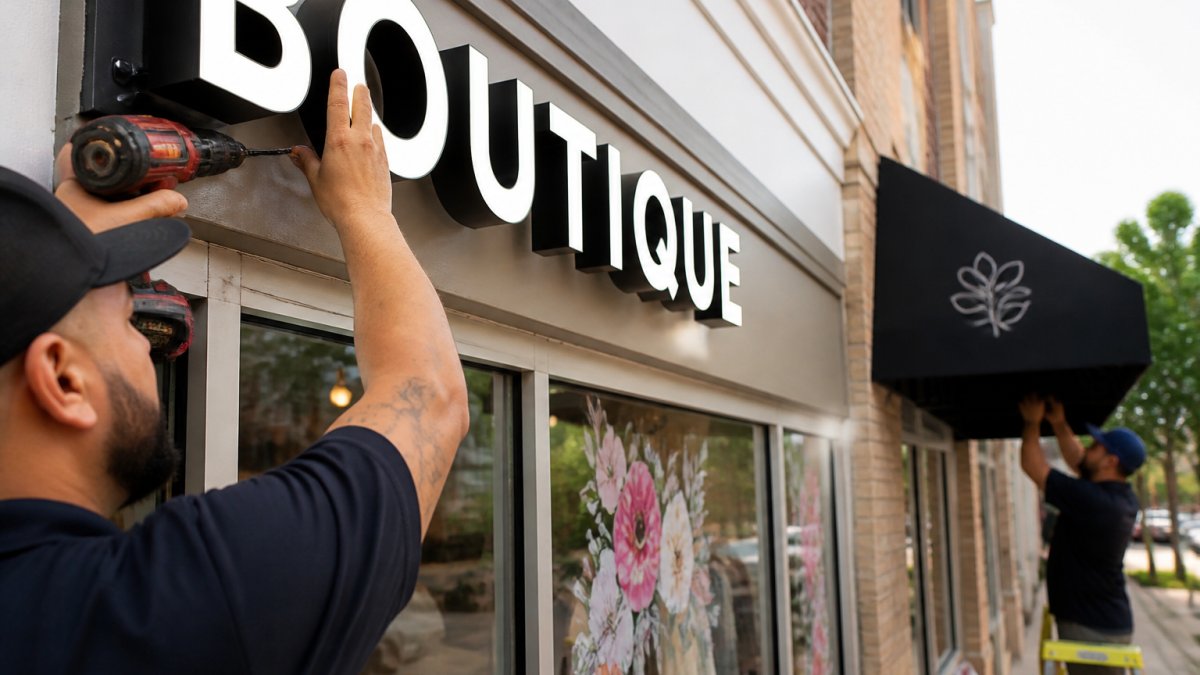
Channel Letters and Dimensional Letters
Channel letters are three-dimensional letterforms that project from your storefront wall, typically illuminated from within or behind.
Dimensional letters offer a similar effect but are typically shallower and lighter-weight. Both styles work well for establishing business identity and ensuring your name is readable even in low-light conditions.
The durability of channel letters makes them a long-term investment. Properly maintained, they last years without losing their visual impact.
Blade Signs and Awning Signs
Blade signs hang perpendicular to your storefront wall, projecting into foot traffic sightlines.
Awning signs incorporate your business name or logo directly into the awning fabric or frame. They provide dual functionality, shade and weather protection plus branding, making them practical for retail storefronts.
Both blade and awning signs work best on busy streets where foot traffic is heavy. They catch the eye at eye level, making them more effective than high wall-mounted signs for pedestrian-focused businesses.
Window Graphics and Vinyl Decals for Retail Stores
Window graphics and vinyl decals transform your storefront windows into marketing real estate. They showcase products, highlight promotions, or communicate your brand story without blocking visibility into your store.
Vinyl decals are cost-effective and flexible, you can change them seasonally or when promotions shift. They also provide privacy while maintaining an inviting appearance. Commercial Window Tinting services can complement your window graphics by adding privacy, reducing glare, and protecting merchandise from UV damage while maintaining the visual impact of your storefront.
High-quality vinyl decals resist fading and peeling when installed correctly. They're a practical choice for small businesses that want professional signage without the expense of permanent installations. Many retail storefronts combine window graphics with other sign types to create layered visual impact.
Materials and Durability: Building Signs That Last
The materials you choose determine how long your signs look professional and how much maintenance they require. Storefront signs face constant exposure to weather, UV rays, temperature fluctuations, and physical wear.
Metal Signage and Acrylic Signs
Metal signage, typically aluminum or steel, offers durability and a premium appearance. Metal holds up well to weather and requires minimal maintenance.
Acrylic signs provide a polished, modern look and are often used for dimensional letters or face-lit applications. Acrylic is UV-resistant when properly formulated, meaning it resists yellowing and degradation from sunlight exposure.
The choice between metal and acrylic often comes down to aesthetics and budget. Metal typically costs more but lasts longer with minimal maintenance.
Weather Resistance and Sign Maintenance
Signs for small business storefronts must withstand rain, snow, salt spray, and intense sun. Weather resistance starts with material selection but extends to protective coatings and proper installation.
Protective coatings, like powder coating on metal or UV-protective clear coats on acrylic, extend sign life significantly. Regular maintenance, including cleaning and inspection for damage, prevents small issues from becoming expensive repairs.
Catching peeling paint, corroded fasteners, or damaged lighting early prevents deterioration that can make your storefront look neglected.
Lighting Options to Maximize Signage Visibility
A sign that's invisible at night doesn't drive foot traffic after sunset. Proper lighting transforms a daytime sign into a 24-hour marketing tool.
LED Lighting and Illuminated Signs
LED lighting has become the standard for storefront signs because it's energy-efficient, long-lasting, and produces consistent, bright illumination.
Illuminated signs, whether backlit channel letters, halo-lit dimensional letters, or edge-lit acrylic faces, create visual drama and ensure your business name is readable from a distance at night.
Color temperature matters too. Warm white (3000K) lighting creates an inviting atmosphere for retail and hospitality businesses. Cool white (5000K) lighting projects a professional, modern image suitable for offices and service providers.
ADA Compliance for Business Signs: Legal Requirements
Federal law requires that business signs meet accessibility standards under the Americans with Disabilities Act (ADA). This isn't optional, it's a legal requirement that protects your business from liability.
ADA-compliant signage must meet specific standards for character size, contrast, and tactile elements. According to the ADA Standards for Accessible Design, signs identifying permanent rooms or spaces must have raised characters or Braille, adequate contrast between characters and background, and appropriate character sizing relative to viewing distance.
For storefront signs, this typically means ensuring that business hours signage, directional signage, and any permanent identification meet ADA standards.
Professional sign designers understand these requirements and can build compliance into your design without compromising aesthetics.
Storefront Sign Cost Estimates and ROI Tracking
Understanding costs and measuring return on investment helps you make informed decisions about signage investments.
Factors That Affect Signage Pricing
Multiple factors influence the cost of signs for small business storefronts: materials (metal vs. acrylic), size, complexity of design, lighting requirements, and installation difficulty.
Custom branding and design complexity add cost. A sign with a simple logo and business name costs less than one incorporating detailed graphics, multiple colors, or intricate dimensional work.
For accurate pricing on your specific project, contact us for a free quote. Pricing depends on your exact specifications, materials, and installation requirements.
Measuring Signage ROI and Conversion Rate Impact
Tracking ROI on signage is less straightforward than digital marketing, but it's measurable. The most direct approach is asking new customers how they found you.
Track foot traffic patterns before and after installing new signage. Many small business owners report noticeable increases in walk-in traffic within weeks of installing professional storefront signs.
Another approach is monitoring sales by time of day. If evening sales increase after installing illuminated signage, that's evidence the lighting is working.
Permits, Regulations, and Installation: What You Need to Know
Before installing signs for small business storefronts, you need to understand local regulations. Sign codes vary by municipality, and violations can result in fines or orders to remove non-compliant signage.
Signage Permits and Local Zoning Requirements
Most municipalities require permits for permanent storefront signs. Permit requirements typically cover sign size, placement, lighting type, and materials. Some areas have strict rules about sign setback from the property line, height restrictions, or limitations on illumination.
Check with your local city or county planning department before designing your signage. They can provide specific requirements for your location and zoning.
The International Sign Association provides resources on sign codes and best practices for navigating local regulations.
DIY vs. Professional Installation
Installing signs yourself might seem like cost savings, but professional installation offers significant advantages.
A professional installer ensures your sign is secure, properly aligned, and meets local codes. Most professional installations come with warranties covering workmanship and materials.
For small business storefronts, professional installation is worth the investment. A poorly installed sign that fails or looks misaligned undermines your brand image and creates liability risks.
Professional installers handle design, permitting, and professional installation, ensuring your storefront signs meet all requirements and look professional from day one.
Custom Branding and Storefront Aesthetics for Small Business Niches
Your signage should reflect your specific business type and target customer. A boutique's signage differs from a restaurant's, which differs from a professional services office.
Building Brand Recognition Through Signage
Consistent branding across all customer touchpoints, including signage, builds recognition and trust. Your storefront sign should incorporate your logo, brand colors, and visual style. When customers see your sign repeatedly, it reinforces brand identity and makes your business memorable.
Strategic use of signage in your storefront area extends beyond the main sign. Window graphics, directional signage, business hours displays, and promotional signage all reinforce your brand when they're visually cohesive. This consistency signals professionalism and intentionality.
Signage Strategies for Specific Small Business Types
Different business types benefit from different signage approaches. A coffee shop might prioritize an inviting awning sign and window graphics showcasing specialty drinks.
Understanding your specific business type and customer behavior informs signage strategy. A business targeting foot traffic prioritizes visible, eye-catching signage.
According to the Small Business Administration's guidance on retail storefronts, the visual presentation of your storefront, including signage, directly influences customer perception and foot traffic patterns.
Getting the right signage for your small business storefront requires balancing aesthetics, functionality, budget, and compliance.
Frequently Asked Questions
What are the most effective types of storefront signs for small businesses?
Channel letters, blade signs, and window graphics are among the most effective. Channel letters provide high visibility and brand recognition from a distance. Window graphics and vinyl decals allow you to use your storefront window as advertising space without blocking customer views. Blade signs work well for narrow storefronts. The best choice depends on your location, budget, and business type. Professional signage can increase foot traffic and customer acquisition significantly.
How much do storefront signs typically cost?
Storefront sign costs vary widely based on size, materials, lighting, and complexity. Factors include whether you choose specific lighting options, custom branding, and whether you hire professional installation. For an accurate storefront sign cost estimate tailored to your specific needs, contact a local sign provider for a quote based on your exact specifications and business requirements.
Do I need a permit for a new storefront sign?
Yes, most jurisdictions require signage permits before installation. Requirements vary by location, so check with your local city or county zoning office. Permit requirements typically cover sign size, height, lighting, and placement. ADA compliance for business signs is also legally required in many cases. Working with a professional sign company helps ensure all regulatory and permit considerations are met, avoiding costly mistakes or removal orders.
How can I track whether my storefront sign is actually bringing in customers?
Track signage ROI by monitoring foot traffic before and after installation, using simple methods like customer surveys asking how they found you, or tracking phone calls and online inquiries. Some businesses use QR codes on signs linked to specific landing pages. Compare sales data from the period before signage installation with data after. Over time, effective signage should correlate with increased customer acquisition and higher conversion rates, making the investment measurable.
What's the difference between vinyl decals and other window graphics for retail stores?
Vinyl decals are a specific type of window graphic made from adhesive vinyl material that adheres directly to glass. They're cost-effective, durable, and easy to change. Other window graphics might include perforated vinyl (which allows visibility through the window), frosted films, or printed graphics. Window graphics for retail stores serve dual purposes: they advertise your business while controlling light, glare, and privacy. The choice depends on whether you want full opacity or partial visibility.
Should I install my own storefront sign or hire a professional?
Professional installation is recommended for most storefront signs. Improper installation can result in signs falling, electrical hazards with illuminated signs, or permit violations. Professionals understand local regulations, have proper equipment, and ensure your sign is secure and meets building codes. While DIY installation might save money initially, professional installation protects your investment, ensures compliance, and typically comes with warranties. For complex signs or those requiring electrical work, professional installation is essential.