 how-to
How Long Does Professional Window Tint Last
Table of Contents
- How Long Does Professional Window Tint Last
- Typical Lifespan by Film Type
- Ceramic vs Dyed Window Tint Lifespan
- Factors That Affect Professional Window Tint Longevity
- Signs of Failing Window Tint
- How to Clean Tinted Windows Without Damage
- Window Tint Warranty Coverage Explained
- Extending the Life of Your Window Tint
- Window Tint Warranty Coverage Explained
- Frequently Asked Questions
Last Updated: September 25, 2026
How Long Does Professional Window Tint Last
Professional window tint typically lasts between 5 to 10 years, depending on the film type, installation quality, and environmental conditions. High-quality ceramic and carbon films can exceed this range, while dyed films tend to fade more quickly. The lifespan of your window tint is determined by how well the adhesive bonds to the glass, how the film resists ultraviolet rejection and heat, and how consistently you maintain it.
Typical Lifespan by Film Type
Dyed film uses layers of dye suspended in an adhesive base and typically lasts 3 to 5 years. The dye fades as ultraviolet rays break down the color molecules. It's the most affordable option but least durable, with fading that accelerates quickly once it begins.
Carbon tint contains carbon particles that absorb heat and block light without reflective metal, lasting 5 to 10 years. It resists fading better than dyed film and offers superior infrared heat rejection.
Ceramic film uses ceramic nanoparticles and is the most advanced technology, lasting 10+ years. The particles resist UV degradation, provide excellent UV and infrared rejection, and maintain optical clarity without haze.
| Film Type | Typical Lifespan | UV Rejection | Best For |
|---|---|---|---|
| Dyed | 3-5 years | Good | Budget-conscious buyers |
| Carbon | 5-10 years | Very Good | Long-term durability |
| Ceramic | 10+ years | Excellent | Maximum longevity |
Ceramic vs Dyed Window Tint Lifespan
Ceramic and dyed film differ in molecular stability: dyed film uses organic colorants that break down in sunlight, while ceramic uses inorganic nanoparticles that resist degradation.
Dyed tint will fade over time as dye molecules absorb UV energy and lose pigment, often turning brown or purple while the adhesive may still hold.
Ceramic film maintains color indefinitely because its particles don't interact with UV light like organic dyes, delivering better long-term value despite higher upfront cost.
The practical difference: if you plan to keep your vehicle or property for 7+ years, ceramic tint pays for itself through durability alone. If you're planning to sell or move within 3 to 5 years, dyed or carbon film may be sufficient.
Carbon Tint Durability
Carbon tint sits between dyed and ceramic in price and performance, with more stable particles and stronger adhesive than dyed film, contributing to longer lifespan.
Carbon tint resists fading better than dyed film, maintaining appearance without purple or brown discoloration, though it gradually loses some infrared heat rejection.
Many customers choose carbon tint for its balance of 5-10 years of performance at lower cost than ceramic, with less haze or optical distortion than dyed film.
Factors That Affect Professional Window Tint Longevity
Installation quality matters enormously. Professional installation creates a tight seal and proper adhesive bond, while poor installation leaves air pockets and gaps that cause premature peeling, bubbling, and delamination.
Curing time is critical. Window tint needs 3-7 days to cure fully, during which water evaporates and adhesive hardens. Rolling down windows or exposing tint to water too soon interrupts this process, causing adhesive failure and peeling.
Maintenance directly extends lifespan. Harsh chemicals, ammonia-based cleaners, and abrasive cloths damage the film and weaken adhesive bonds; proper cleaning products and soft cloths preserve durability.
Climate and Sun Exposure
Intense sunlight accelerates tint degradation, especially on south-facing windows where UV exposure is constant.
In hot, sunny climates, thermal cycling weakens adhesive bonds and causes edge peeling. Dyed film fades faster; ceramic film resists degradation much better.
In humid climates, moisture penetrates weak adhesive bonds, creating cloudy spots or bubbles that trap water and accelerate delamination.
Extreme cold makes adhesive brittle; impacts or flexing can cause cracking, though this is less common.
Installation Quality and Curing
Professional installation is the single biggest predictor of tint longevity. Proper surface preparation, thorough glass cleaning, and careful film application avoid air bubbles and ensure strong adhesion.
During curing, water evaporates and adhesive hardens completely. Exposure to water, heat, or mechanical stress during this period compromises bonding.
Common curing mistakes, rolling down windows early, washing too soon, or exposing to direct sunlight, interrupt adhesive hardening and cause peeling or bubbling months later.
Signs of Failing Window Tint
Knowing what to look for helps you catch problems early. Some signs of failing tint are obvious. Others are subtle but indicate the film is starting to fail.
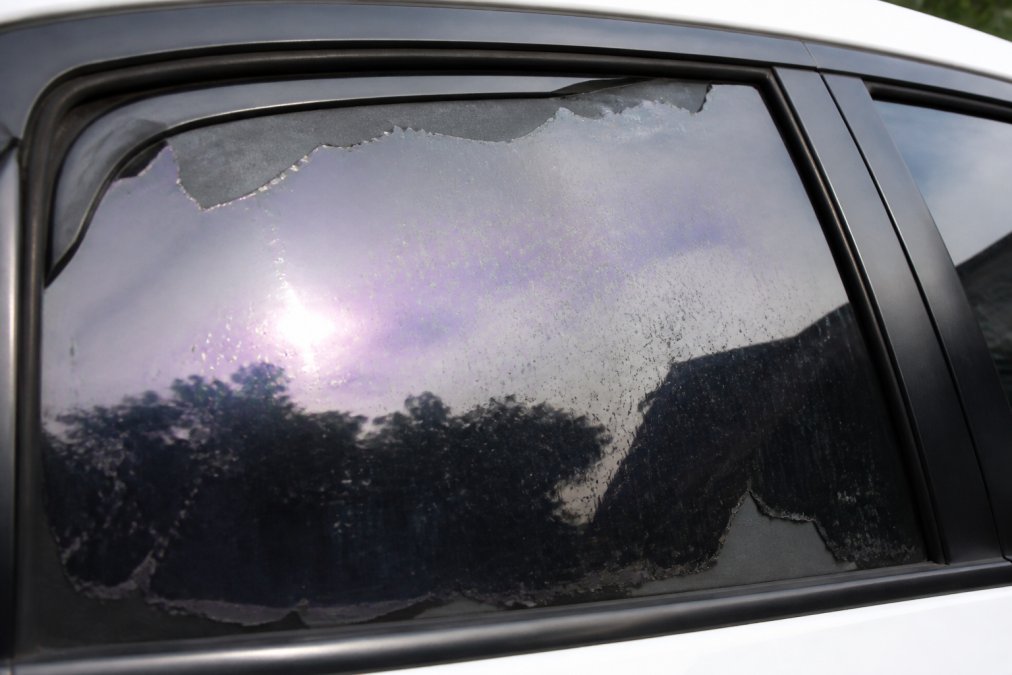
Bubbling and blistering appear as raised spots under the film. These are pockets of air or moisture trapped between the film and the glass. Bubbling usually starts at the edges and spreads inward. Once bubbling begins, it accelerates. The film loses its seal, and more moisture enters.
Peeling edges occur when the adhesive bond fails around the film perimeter. You'll see the film lifting away from the glass, usually starting at corners. Peeling indicates the adhesive is no longer holding. Once peeling starts, it's difficult to stop without professional removal and reinstallation.
Discoloration and fading show up as color changes. Dyed film turns purple or brown. The film may also develop a hazy appearance. This happens because the dye molecules are breaking down. Discoloration doesn't necessarily mean the film is failing functionally, but it signals that the material is degrading.
Haze and optical distortion make it harder to see through the window clearly. The film develops a cloudy appearance. This usually happens with lower-quality dyed film or when moisture gets trapped under the film. Optical clarity degrades over time as the adhesive and film interact.
Adhesive failure is when the entire film starts to separate from the glass. You might notice the film moving slightly when you touch it, or see a visible gap between the film and the glass edge. This is a sign the tint needs to be removed and replaced.
How to Clean Tinted Windows Without Damage
Proper cleaning extends tint lifespan significantly. The wrong cleaning products or techniques can damage the film and weaken the adhesive bond.
Use ammonia-free cleaners. Ammonia breaks down the adhesive over time. Standard glass cleaners often contain ammonia. Look for cleaners labeled ammonia-free or use a simple mixture of water and a small amount of dish soap. This gentle approach cleans effectively without damaging the film.
Use soft microfiber cloths. Avoid paper towels, newspaper, and rough cloths. These can scratch the film surface and create micro-tears. Microfiber cloths are soft and effective. They lift dirt without abrading the tint.
Clean the outside first. Start with the exterior of the window. This prevents dirt from being dragged across the interior film. Use downward strokes rather than circular motions.
Avoid excessive pressure. Don't scrub hard or apply heavy pressure. Let the cleaner do the work. Gentle wiping is sufficient for normal dirt and dust.
Never use squeegees on fresh tint. Wait at least 30 days after installation before using a squeegee on interior windows. The adhesive needs time to fully cure. Even then, use light pressure.
Don't clean during the curing period. For the first week after installation, avoid cleaning the tinted windows. The adhesive is still hardening, and water exposure can interrupt this process.
Window Tint Warranty Coverage Explained
Most professional window tint installations come with a warranty that covers defects in the film and installation workmanship. Understanding what's covered helps you know what to expect.
Standard warranties typically cover 3 to 10 years, depending on the film type and installer.
What warranties usually cover:
- Film delamination and peeling caused by manufacturing defects
- Adhesive failure due to installation errors
- Fading and discoloration in dyed or carbon film
- Haze development in the film
What warranties typically don't cover:
- Damage from accidents, impacts, or intentional damage
- Damage from improper cleaning or maintenance
- Damage from exposure to extreme conditions beyond normal use
- Removal and reinstallation labor costs
- Cosmetic issues that don't affect functionality
Extending the Life of Your Window Tint
You can actively extend your tint's lifespan through proper maintenance and careful use.
Window Tint Warranty Coverage Explained
Professional window tint installations from reputable providers typically include warranties covering defects and workmanship. The warranty period depends on the film type and the installer's confidence in their work.
Frequently Asked Questions
How long does professional window tint last on average?
Professional window tint typically lasts 5-10 years on automotive applications, depending on the film type and maintenance. Dyed film generally lasts 3-5 years, while ceramic and carbon films can last 10+ years. Residential window tint often lasts longer since it experiences less thermal stress. Proper installation and regular maintenance significantly extend lifespan by preventing adhesive failure and delamination.
What's the difference between ceramic vs dyed window tint lifespan?
Dyed film typically lasts 3-5 years before fading and turning purple due to ultraviolet exposure. Ceramic film is engineered to resist degradation and commonly lasts 10+ years because the ceramic particles don't break down under solar energy and thermal stress. Carbon tint falls between them at 5-7 years. Ceramic costs more upfront but delivers superior longevity and infrared heat rejection, making it the better value for long-term ownership.
What are the signs of failing window tint?
Common indicators include bubbling or moisture pockets beneath the film, peeling at edges, visible discoloration or purple haze, loss of optical clarity, and adhesive failure causing the film to separate from glass. These issues signal that the tint's protective properties have degraded. Professional removal and re-tinting restores UV rejection and heat dissipation. Catching these signs early prevents further interior fading and thermal damage to your vehicle's interior materials.
How should I clean tinted windows to avoid damaging the film?
Use an ammonia-free cleaner and a soft microfiber cloth to prevent adhesive breakdown. Avoid harsh chemicals and abrasive materials that can cause peeling. Wait at least 3-5 days after installation before cleaning to allow the curing period to complete. For stubborn spots, use isopropyl alcohol on a damp cloth. Never use squeegees or high-pressure washers on freshly tinted windows. Gentle, regular cleaning maintains optical clarity and extends the tint's lifespan.