 how-to
Does Residential Window Tint Stop Glare? A Complete Guide
Table of Contents
- How Residential Window Tint Stops Glare
- Does Window Tint Block UV Rays and Protect Your Home
- Benefits of Residential Window Film Beyond Glare Reduction
- How to Choose Window Tint for Glare Reduction
- Professional Installation vs. DIY Window Tinting
- Will Window Tint Make Your Home Too Dark
- Maintaining Your Residential Window Tint
- Conclusion
- Frequently Asked Questions
Last Updated: September 28, 2026
How Residential Window Tint Stops Glare
Does residential window tint stop glare? Yes, it does. Residential window tint reduces glare by filtering and absorbing solar energy before it enters your home. The film blocks up to 99% of ultraviolet radiation and a significant portion of visible light, which directly addresses the brightness that causes eye strain and discomfort.
Window tint contains polyester film with special coatings that absorb solar energy. When sunlight hits the tinted window, the film absorbs light rather than letting it pass through, reducing glare intensity on screens, furniture, and floors.
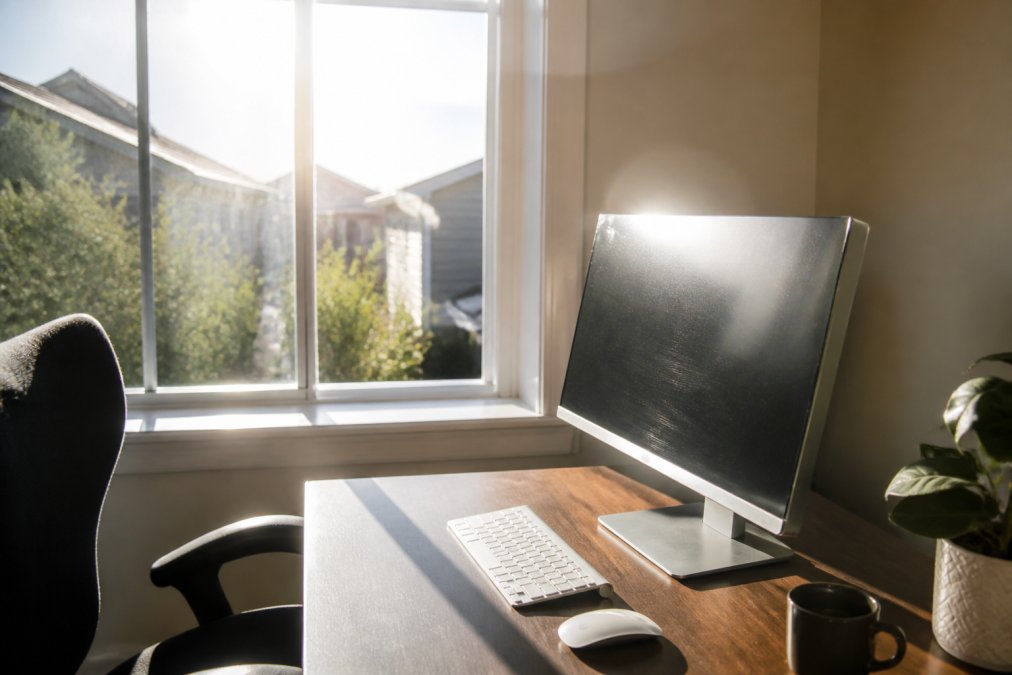
Effectiveness depends on tint percentage, darker tints block more light and reduce glare more effectively, but darker isn't always better for your home.
Does Window Tint Block UV Rays and Protect Your Home
Quality residential window film blocks up to 99% of UV rays, protecting skin from cancer risk and preventing interior furnishings from fading.
UV protection safeguards health and preserves home contents, furniture, artwork, flooring, and textiles fade over time without UV blocking.
UV blocking works regardless of tint darkness, even clear films block most UV rays, making UV protection and glare reduction independent benefits.
Benefits of Residential Window Film Beyond Glare Reduction
Window tint delivers multiple benefits beyond glare. Energy efficiency is the biggest: by reducing solar heat gain, the film keeps homes cooler, lowering utility bills and extending HVAC life.
Ceramic films reject more infrared radiation than reflective coatings, providing better cooling without mirror-like appearance. The thermal benefit works year-round, retaining indoor heat in winter.
Privacy is another advantage, tinted windows prevent outside viewing during the day, important for ground-floor rooms, street-visible offices, and bathrooms. Privacy level depends on tint percentage and film type.
Window film holds glass together if broken, reducing injury risk and deterring forced entry, not a security system replacement, but an added layer of protection.
How to Choose Window Tint for Glare Reduction
Tint percentage measures visible light transmission. A 50% tint blocks half the light; a 20% tint blocks 80% and reduces glare more aggressively but darkens the home. Most homeowners choose 30-50% for living spaces and 15-35% for home offices.
Film type matters next. Ceramic films offer best heat rejection and optical clarity without visual distortion. Reflective coatings bounce more light away but create a mirror effect some dislike.
Window orientation should guide choices. East-facing windows get morning glare; west-facing get afternoon glare; north-facing rarely need tinting; south-facing benefit from heat rejection. Analyze your specific problem before treating all windows the same.
| Tint Percentage | Glare Reduction | Interior Brightness | Best For |
|---|---|---|---|
| 70-80% | Minimal | Stays bright | UV protection only |
| 50-70% | Moderate | Still bright | Light glare in living areas |
| 30-50% | Strong | Noticeably darker | Home offices, media rooms |
| 15-30% | Maximum | Significantly darker | Severe afternoon glare |
Professional Installation vs. DIY Window Tinting
Professional installation and DIY tinting deliver fundamentally different results due to equipment, technique, and glass knowledge, affecting durability and safety.
Professional installation uses precision equipment in controlled environments with humidity and temperature monitoring, critical for proper adhesive setting. Professionals understand glass compatibility and use specialized slip solutions for repositioning without trapping air.
Double-pane seals can fail with incorrect application. Tempered glass can break if film is applied unevenly or experiences thermal shock. Professional installers know which films suit which glass types and understand expansion rate differences in older windows.
Professional work includes a warranty, typically 5-10 years against peeling, fading, and separation, backed by proper documentation and material traceability.
Film needs 3-5 days to cure before cleaning. During this period, adhesive bonds fully to glass. Rushing or exposing film to water causes delamination, visible separation from the glass.
DIY installation introduces multiple failure points. Dust particles become permanent defects visible in sunlight. Bubbles are nearly impossible to remove once setting begins. Improper cutting leaves gaps where UV rays and heat still enter.
The biggest risk is glass damage. Incorrect application to tempered glass causes cracks weeks later. Wrong technique on double-pane windows compromises seals, causing condensation, a $300-$800 repair per window. Failures aren't visible immediately.
Professionally installed film lasts 10-15 years. DIY film typically shows peeling, browning, and separation within 2-3 years, erasing cost savings.
Will Window Tint Make Your Home Too Dark
This is the question every homeowner asks, and the honest answer requires analyzing your specific windows and rooms rather than applying a one-size-fits-all tint percentage.
Window orientation determines darkness perception. A 50% tint on a south-facing window stays noticeably bright because the sheer volume of incoming light means blocking half still leaves plenty. The same 50% tint on a north-facing window feels significantly darker because north-facing rooms receive diffuse, indirect light year-round. East-facing windows get intense morning light, so 50% tint there feels bright in the morning but normal by afternoon. West-facing windows get brutal afternoon glare, so 50% tint feels darker in the afternoon when you need it most.
This is why professional installers recommend different percentages for different windows. A home office with a west-facing window might use 30% tint (blocks 70% of light) to control afternoon glare without feeling like a cave. The same home's south-facing living room might use 50-70% tint (blocks 30-50% of light) because the volume of incoming light keeps the space bright.
Room function matters as much as orientation. Bedrooms and media rooms tolerate darker tint because you're not reading or working there during peak daylight. A 20-30% tint in a bedroom feels cozy, not dark. Home offices and kitchens need more light for task work, so 40-50% tint is safer. Living rooms are the hardest to predict because they serve multiple purposes, you might want brightness during the day but privacy and glare control in the afternoon.
Glass type affects perceived brightness. Ceramic films maintain optical clarity, meaning light passes through cleanly without distortion. At the same tint percentage, ceramic film feels brighter than reflective film because there's no visual haze. If you're concerned about darkness, ceramic film is worth the premium cost. Reflective coatings bounce light away but create a subtle mirror effect that makes interiors feel slightly dimmer even at lighter percentages.
VLT (Visible Light Transmission) percentage is the actual measurement. A 50% VLT film lets 50% of visible light through. But "50%" feels different depending on how much light is hitting the window. On a bright afternoon, 50% VLT still feels bright. On an overcast day or in a north-facing room, 50% VLT feels noticeably darker. This is why testing before committing is so valuable.
Most homeowners adapt within a week. What feels dark on day one feels normal by day seven.
Maintaining Your Residential Window Tint
Window tint lasts longest with proper care. The film itself is durable, but how you treat it determines whether it stays clear and bubble-free for years.
Conclusion
Does residential window tint stop glare? Absolutely. Quality window tint blocks the solar energy that causes eye strain and discomfort, protecting both your health and your home's interior. The film blocks up to 99% of harmful UV rays, reduces heat gain for energy efficiency, and adds a layer of privacy and safety.
Frequently Asked Questions
Will residential window tint actually reduce glare on computer screens and monitors?
Yes. Residential window tint significantly reduces glare by filtering incoming sunlight and lowering the contrast between bright outdoor light and your screen. Most homeowners report reduced eye strain and improved screen visibility within days of installation. The effectiveness depends on tint percentage and window orientation, south and west-facing windows with afternoon sun exposure see the most dramatic improvement.
Does window tint block UV rays and protect furniture from fading?
Quality residential window film blocks up to 99% of ultraviolet radiation, which is the primary cause of fading in furniture, flooring, and artwork. This protection extends the life of your interior furnishings and maintains color vibrancy over years. Quality films offer excellent UV blocking without darkening your home's interior.
How do I choose the right window tint percentage for glare reduction without making my home too dark?
Glare reduction effectiveness depends on visible light transmission (VLT) percentage and film type. Consider your window orientation, room use, and privacy needs. Professional consultation helps match film type to your specific situation.
Is professional window tint installation worth the cost compared to DIY application?
Professional installation ensures proper adhesion, eliminates bubbles and peeling, and guarantees longevity. DIY application risks visible defects, reduced lifespan, and potential warranty voidance. With 35+ years of experience, professional installers apply proven techniques and premium films that last significantly longer than amateur work, protecting your investment in glare reduction and energy efficiency.