 blog
Best Fleet Vehicle Wrap Services: Quality, ROI & Maintenance
Table of Contents
- What Makes the Best Fleet Vehicle Wrap Services
- Benefits of Partial vs Full Fleet Wraps
- Fleet Branding and Vehicle Advertising ROI
- Avery vs 3M Vinyl for Fleet Wraps: Material Quality Matters
- Commercial Vehicle Wrap Maintenance Tips and Longevity
- Professional Installation and Surface Preparation Standards
- Wrap Removal and Lease Return Compliance
- Frequently Asked Questions
Last Updated: September 27, 2026
What Makes the Best Fleet Vehicle Wrap Services
Finding the right fleet vehicle wrap services requires understanding what separates quality providers from the rest. The best services combine premium materials, expert installation, and proven maintenance protocols that keep your vehicles looking professional for years.
Fleet branding through vehicle wraps maximizes visibility on the road, transforming vehicles into mobile marketing machines. But not all wrap providers deliver the same results.
The best fleet vehicle wrap services go beyond applying vinyl to metal, they involve thorough surface preparation, material selection matched to your climate, and clear guidance on long-term care.
Key factors separating excellent providers include vinyl material choice, installation expertise, and upfront maintenance guidance. Rushing installation or using lower-grade adhesive vinyl saves money initially but causes premature failure, costing far more long-term.
Benefits of Partial vs Full Fleet Wraps
Choosing between partial and full wraps depends on your fleet size, budget, and branding goals.
Full wraps cover the entire vehicle exterior, creating maximum visual impact with company name, logo, and messaging on all sides. They work best for fleets where every vehicle represents brand identity equally.
Partial wraps cover doors, rear panels, or hoods at 40-60% less cost while providing significant visibility and budget flexibility for larger fleets.
Partial wraps require one to two days per vehicle; full wraps take two to three days. Staggered partial installations often prove more practical than taking entire fleets offline simultaneously.
Fleet Branding and Vehicle Advertising ROI
Fleet branding transforms vehicles into continuous 24/7 advertising reaching thousands daily. Fleet managers need a concrete framework to evaluate whether wrapping makes financial sense for their operation.
Calculating impressions and cost per impression
A typical commercial vehicle generates 30,000 to 70,000 monthly impressions depending on location, urban delivery vehicles approach the upper range, rural service vehicles the lower end.
To calculate your cost per impression, divide the total wrap investment by expected impressions over the wrap's lifespan. For example:
- Full wrap cost: $3,500
- Expected lifespan: 5 years
- Estimated monthly impressions: 50,000
- Total impressions over 5 years: 3,000,000
- Cost per impression: $0.0012 (roughly one-tenth of a cent)
Compare this to traditional advertising channels. Digital display ads typically cost $0.50 to $3.00 per thousand impressions (CPM). Vehicle wraps deliver impressions at a fraction of digital costs, particularly when calculated across multiple years.
Tracking attribution and measurable results
Track wrap effectiveness by adding unique phone numbers or QR codes to designs, asking new customers how they heard about your business, monitoring website traffic spikes, and using location-based analytics.
Many service-based businesses report 15-25% of new customer inquiries mention seeing wrapped vehicles, providing concrete ROI justification.
ROI timeline by industry
Service businesses typically see measurable ROI within 12-18 months: urban delivery 8-12 months, regional contractors 14-20 months, rural operations 20-30 months.
Established businesses see faster ROI as wrapped vehicles reinforce awareness; new businesses may require longer to generate measurable attribution.
Multi-vehicle fleet economics
Fleet size accelerates ROI: single vehicle 18-24 months, 5-vehicle fleet 12-16 months, 10+ vehicle fleet 10-14 months. Multi-vehicle wraps receive 10-20% fleet pricing discounts.
Avery vs 3M Vinyl for Fleet Wraps: Material Quality Matters
Material selection determines whether your fleet vehicle wrap services investment lasts three years or seven years. The two industry-standard vinyl manufacturers, Avery and 3M, offer different performance characteristics that affect durability, appearance, and cost.
3M vinyl offers superior UV resistance and color retention with cast formulations that resist fading in extreme temperatures. Premium 3M wraps include laminate protection against weathering.
Avery vinyl provides reliable performance at lower cost but may show faster color degradation in high-UV regions. It's cost-effective for fleets replacing wraps every 3-4 years.
3M's adhesive maintains grip longer, reducing edge lift; Avery's adhesive requires more careful application and maintenance.
| Material | UV Resistance | Expected Lifespan | Best For | Adhesive Strength |
|---|---|---|---|---|
| 3M Cast Vinyl | Excellent | 7+ years | Long-term fleets | Premium |
| 3M Calendered Vinyl | Good | 5-7 years | Standard fleets | Strong |
| Avery Cast Vinyl | Good | 5-6 years | Budget fleets | Good |
| Avery Calendered Vinyl | Fair | 3-4 years | Short-term needs | Adequate |
Professional installers understand that material choice connects directly to customer satisfaction. A wrap that fades noticeably after two years creates negative brand perception, while a wrap maintaining vibrant colors for seven years reinforces brand professionalism.
Commercial Vehicle Wrap Maintenance Tips and Longevity
Proper maintenance extends fleet vehicle wrap services lifespan significantly. Many failures result from inadequate care, not material defects.
The first two weeks represent a critical curing period. Avoid washing, harsh weather, and pressure washing. Keep vehicles in covered storage when possible.
Hand wash with mild soap and water; avoid automated car washes that catch wrap edges. Rinse thoroughly and dry with soft cloths.
Inspect wrap edges monthly for early lift detection. Contact your provider immediately for edge sealing to prevent moisture infiltration.
Avoid parking under trees; sap and debris damage vinyl surfaces. Clean gently with vinyl-safe cleaners if damage occurs.
Park vehicles in covered storage during idle periods and consider UV-protective coatings designed for vinyl wraps, which add 1-2 years to lifespan.
Professional Installation and Surface Preparation Standards
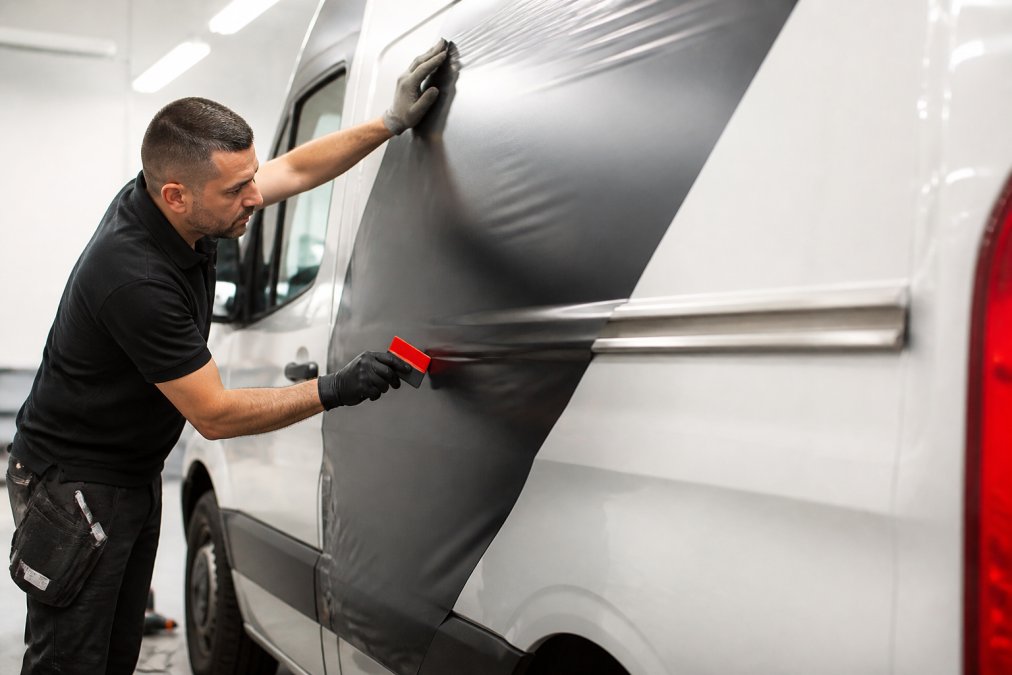
Installation quality determines wrap durability. Professional services separate quality providers through meticulous surface preparation and expert technique, while meeting regulatory and insurance requirements.
Surface preparation and adhesion standards
Surface preparation requires complete degreasing with specialized solvents to remove industrial fallout and road grime. This process takes 45 minutes to an hour per vehicle and cannot be rushed.
Industry standards recommend AMA guidelines: cleaning with isopropyl alcohol, allowing 15-30 minutes drying time, inspecting surfaces under proper lighting, and testing adhesion before full application.
Surface inspection identifies paint imperfections and rust spots before vinyl application, preventing future failure. This quality control separates professional services from budget shops.
Installation technique and industry certifications
Installation requires skill stretching vinyl around curves without wrinkles or air bubbles, using specialized tools to ensure proper adhesion and clean edges.
Reputable providers employ installers certified through the International Sign Association (ISA) or manufacturer training programs. Ask prospective providers about installer certifications.
Verify providers use professional-grade equipment and offer clear warranties covering installation defects, typically 3-5 years depending on material quality.
Regulatory compliance for commercial vehicle graphics
Fleet vehicle wraps must comply with state and local signage regulations. Improper compliance can result in fines or vehicle impoundment.
Key regulatory considerations: wraps cannot obstruct safety markings, license plates, or VINs; some jurisdictions require reflectivity standards; hazmat placards and weight markings must remain visible; local ordinances may restrict graphic size, content, or placement.
Quality wrap providers understand these regulations and will flag compliance issues during the design phase. They should ask about your vehicle's use, weight classification, and service area to identify applicable regulations before design begins.
Insurance implications and liability considerations
Fleet vehicle wraps can affect your commercial auto insurance coverage and liability exposure. Insurance carriers need to know about significant vehicle modifications, and wraps can impact how claims are handled.
Notify your commercial auto insurance carrier before wrapping vehicles.
- Wrap design specifications and materials used
- Installation provider information
- Expected lifespan and maintenance protocols
- Any contact information or promotional content displayed on the wrap
Documentation and quality assurance
Ask your provider to provide written specifications including:
- Vinyl material type and manufacturer
- Expected lifespan under normal conditions
- Specific maintenance requirements
- Warranty coverage and duration
- Installation date and technician information
- Contact information for warranty claims or removal services
Wrap Removal and Lease Return Compliance
Fleet managers operating leased vehicles need to understand wrap removal requirements and potential surface damage concerns. Improper removal can damage paint, violating lease agreements and triggering expensive repair charges.
Frequently Asked Questions
What factors determine the best fleet vehicle wrap services?
The best fleet vehicle wrap services combine material quality (premium adhesive vinyl with UV resistance), professional installation expertise, design customization, and proven durability. Look for providers with experience handling fleet-size projects, high-quality printing materials, and a track record of maintaining wrap integrity over time. Installation quality, surface preparation, and post-installation support are equally critical to long-term performance and brand consistency across your vehicles.
How long do professional fleet vehicle wraps typically last?
Professional fleet vehicle wraps typically last 5-7 years with proper maintenance, though high-quality materials like premium 3M and Avery vinyl can extend durability to 8+ years. Longevity depends on climate exposure, vehicle usage, maintenance protocols, and installation quality. Regular cleaning, avoiding abrasive materials, and protecting wraps from extreme UV exposure extend their lifespan. Fleet managers should budget for wrap replacement cycles and factor durability into their cost-benefit analysis when selecting materials and service providers.
What maintenance is required for fleet vehicle graphics?
Fleet vehicle graphics require regular gentle cleaning with mild soap and water, avoiding high-pressure washers and abrasive scrubbers that damage vinyl. Inspect wraps quarterly for edge lifting, peeling, or UV fading. Park vehicles in shaded areas when possible to minimize sun exposure. Avoid parking under trees where sap and debris accumulate. Prompt repairs of small damage prevent larger failures. Proper maintenance protocols directly impact wrap durability and the visual impact of your mobile marketing investment.
Is a full wrap or partial wrap better for fleet vehicles?
Full wraps provide maximum brand visibility and complete vehicle coverage, making them ideal for high-traffic routes and maximum marketing impact. Partial wraps (hood, doors, or side panels) cost less and work well for smaller fleets or budget-conscious campaigns. Full wraps offer better paint protection and uniform fleet appearance; partial wraps allow faster installation and easier removal. Your choice depends on budget, fleet size, marketing goals, and vehicle usage. Both options deliver strong ROI when professionally installed with quality materials.